Cardamom
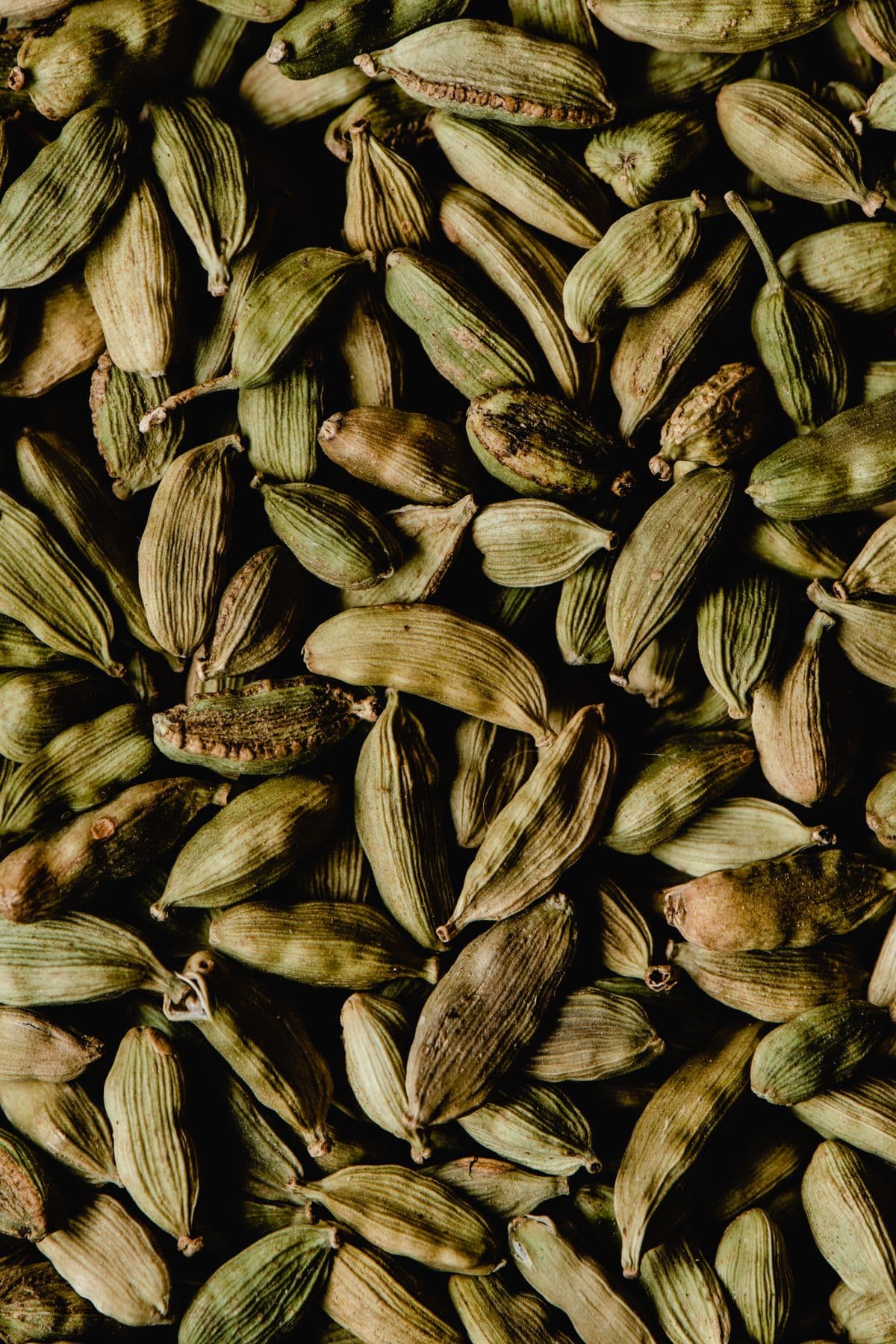
Green cardamom pods hand-sorted and graded by size and colour, with volatile oil content, moisture and residue compliance verified on the shipped lot.
At a glance
- Graded by pod size in millimetres and by colour
- Hand-sorted for uniformity and defect removal
- Volatile oil content tested per lot
- Moisture controlled to prevent mould in transit
- Vacuum and barrier packing for aroma retention
Size grading, colour and appearance
Size is the primary commercial grade determinant and is expressed as the pod size passing over a screen of a given aperture in millimetres. Larger pods command substantially higher prices, and the price steps between size grades are significant. We specify size in millimetres rather than by grade name, since grade nomenclature varies and a named grade can mean different things to different exporters.
Uniformity within a lot matters as much as the nominal size, particularly for retail and gift packing where the customer sees the pods together. A lot that averages the specified size but contains a wide spread looks markedly poorer than a tightly graded lot at the same average. We specify uniformity and verify it by screening samples across the lot rather than accepting an average.
Colour is the other appearance driver. Bright green pods are the premium presentation and colour depends on variety, harvest maturity, curing method and temperature, and storage. Curing at controlled temperature preserves green colour; over-heating during curing yellows the pods. Colour is specified and assessed against a retained standard under controlled lighting, and we replace the retained standard periodically because it fades.
Artificial colour enhancement is a known malpractice in cardamom and we test for it. Pods can be treated to appear greener, and the treatments used are not always permitted in food. We screen for unauthorised colourants and, where a lot's colour looks inconsistent with its other characteristics, we test rather than assume. Buyers paying a premium for appearance are entitled to know the colour is natural.
Volatile oil, aroma and freshness
Volatile oil is what makes cardamom worth its price and it is the parameter most affected by age and handling. Content is specified as a minimum percentage determined by steam distillation and verified on the shipped lot. This matters because a visually excellent lot with depleted volatile oil is a poor purchase, and appearance gives limited indication of aroma once pods have been well presented.
Curing method and temperature have a large effect. Cardamom is cured after harvest to reduce moisture, and curing at controlled, moderate temperature preserves both colour and volatile oil, while faster, hotter curing damages both. We source from processors using controlled curing and we specify the outcome parameters rather than the method alone, since the parameters are what we can verify.
Age and storage conditions determine how much volatile oil survives to the buyer. Cardamom stored warm, exposed to air or held for long periods loses aroma steadily. We state crop year, schedule packing close to shipment rather than shipping long-held stock, and specify barrier packaging. For a product at cardamom's price point, packaging that preserves aroma is a small proportion of the value and a large proportion of the buyer's satisfaction.
Pods should be closed and intact, because a split pod loses volatile oil rapidly and also allows the seeds to dry and darken. We specify limits on split, open and empty pods, and on loose seed content, since a lot with a high proportion of split pods will have lost aroma regardless of its measured content at packing and will continue losing it faster in storage.
Moisture, mould risk and weight integrity
Moisture control in cardamom carries two distinct concerns. The first is mould: pods above safe moisture will develop mould in transit, particularly in a container crossing tropical waters, and cardamom is expensive enough that a mould-affected consignment is a serious loss. The second is commercial: because cardamom is sold by weight at a high price, added moisture is a direct route to inflating value, and it is a known malpractice.
We specify a maximum moisture content, verify it before packing on samples drawn across the lot, and re-check at loading where the interval justifies it. A lot at the upper end of the moisture specification is both a mould risk and a value question, so we specify a working maximum with margin rather than at the limit of acceptability.
Weight integrity extends beyond moisture. We verify net weights at packing, check for foreign matter added to increase weight, and check bulk density which will be abnormal if the lot has been adulterated with heavier material. On a product at cardamom's value these checks are proportionate; on a cheap spice they would be excessive.
Transit protection is specified accordingly: barrier packaging, container desiccants on humid routes, liner protection, and loading that prevents compression damage to the pods. Cardamom pods are fragile and crush easily, which both damages appearance and splits pods, so packing must protect against compression as well as moisture.
Sorting, cleaning and defect control
Cardamom is hand-sorted, and the labour content in sorting is a substantial part of its processing cost. Sorting removes undersized pods, split and open pods, empty pods, discoloured and yellowed pods, mould-affected pods, stalk and calyx material, foreign matter, and loose seed. It also achieves the size and colour uniformity that determines the grade.
Because sorting is labour intensive, it is the obvious place to cut cost, and the difference between a well-sorted and a poorly sorted lot is visible immediately. We specify the defect limits and inspect against them on samples drawn across the lot, and we inspect visually in addition to analysing, because appearance is a large part of what the buyer is paying for in this product.
Mechanical cleaning complements hand sorting: air classification removes light and empty pods and dust, sieving grades by size, and magnetic separation removes ferrous contamination. Where a buyer requires it, metal detection is applied after packing. Sterilisation by steam is available where a food manufacturer's microbial specification requires it, though it must be applied carefully because cardamom's volatile oil is heat sensitive.
For extraction buyers, the cosmetic grade is largely irrelevant and paying for it is wasteful. We can supply lower cosmetic grades, including split pods, seeds and cardamom cuttings, at substantially lower prices with the volatile oil content specified and verified. Directing an extraction buyer to a premium visual grade would be a straightforward way of overcharging them, and we would rather match the grade to the use.
Residues, testing and documentation
Residue compliance follows the same approach as our other spice lines. We establish the destination market's applicable maximum residue limits before production, source from growers and processors whose practices are compatible, and test each lot against that market's limit list. Cardamom is a high-value crop and is intensively managed in cultivation, which makes residue management a genuine focus rather than a formality.
Testing scope typically covers a multi-residue pesticide screen, heavy metals, unauthorised colourants, microbiological parameters where the buyer requires them, volatile oil content, moisture, and the physical grading parameters of size, colour and defect percentages. Scope is agreed before production against both the destination's requirements and the buyer's own specification.
Documentation includes the certificate of analysis with measured values, phytosanitary certificate, certificate of origin, commercial invoice and packing list, fumigation certificate where applicable, treatment certificate where sterilisation is applied, and market-specific health or export certificates. Lot-level traceability is maintained with bag or carton marking linked to the analysis.
For buyers requiring supply chain assurance, we can route production to certified facilities, support buyer audits, and arrange third-party sampling and inspection at loading. Given cardamom's value, third-party inspection at loading is proportionate for a significant consignment and we encourage it rather than resisting it.
Packaging and presentation
Bulk cardamom is packed in cartons or in woven bags with polyethylene liner, in smaller unit weights than other spices because of its value and fragility. Barrier packaging matters more here than in any other spice line: multi-layer laminate, vacuum packing and gas flushing all substantially extend aroma retention, and at cardamom's price the incremental packaging cost is easily justified.
Retail and gift presentation is a significant part of the cardamom market and we produce to specification: printed pouches and laminate packs, vacuum packs, glass and PET jars, gift boxes and tins, and small sachets. Because the product is bought partly on appearance, transparent windows or clear packing that displays the pods is common, and it has to be balanced against light exposure that degrades colour and aroma.
Private-label supply covers packaging design and printing, pack sizes, barcoding and multilingual labelling. For premium retail, we advise on the trade-off between visual display and barrier performance, since a clear jar looks attractive on a shelf and is the worst environment for preserving the product inside it. Where a buyer chooses display over barrier, we say plainly what it costs in shelf life.
Buying cardamom through VP Global Exim
Tell us the pod size in millimetres, the colour requirement, the minimum volatile oil content, maximum moisture, defect limits, crop year, your destination's residue limits, packaging requirement, quantity and destination. Critically, tell us the end use: retail and gift packing, culinary use, beverage blending or extraction, because the grade that suits each is different and the price difference between them is large.
We will write a specification, quote against it, and be candid about pricing. Cardamom prices are volatile and grade differentials are wide, so we quote with a stated validity period and we explain what each specification parameter contributes to the price. Where a buyer's target price implies a lower grade, we will say which parameter has to move rather than shipping a lower grade against a higher specification.
For first orders we strongly recommend pre-shipment sample inspection and analysis, and third-party sampling at loading for significant consignments. Given the value at stake and the known malpractices in this product around colour, moisture and size mixing, verification before shipment is the most cost-effective step a cardamom buyer can take.
Cardamom specifications
| Grading | Pod size specified in millimetres by screen aperture with uniformity verified across the lot; colour specified against a controlled retained standard |
|---|---|
| Volatile oil | Minimum percentage determined by steam distillation on the shipped lot |
| Physical parameters | Moisture with working margin below the limit, split and open pods, empty pods, loose seed, discoloured and mould-affected pods, stalk and foreign matter |
| Sorting | Hand sorting for size and colour uniformity and defect removal, plus air classification, sieving and magnetic separation |
| Colour authenticity | Screening for unauthorised colourants and artificial colour enhancement |
| Weight integrity | Net weight verification, added-moisture checks and bulk density verification |
| Extraction grades | Split pods, seeds and cuttings supplied at lower cost with volatile oil specified where cosmetic grade is irrelevant |
| Sterilisation | Steam sterilisation available where required, applied carefully given heat sensitivity of volatile oil |
| MOQ | From 250 kg per specification given product value; larger quantities consolidated with other spice lines |
| Lead time | 20-35 days subject to crop availability, sorting and laboratory turnaround |
Made to your requirements
- Size and colour grade specified to end use rather than to a grade name
- Extraction grades supplied where cosmetic quality is not required
- Vacuum and gas-flushed packing for maximum aroma retention
- Retail, gift and private-label packaging
- Third-party sampling and inspection at loading
- Colour authenticity testing on premium visual grades
Where our cardamom is used
Typical buyer profiles and end uses we supply into.
Cardamom export questions
The questions buyers ask most often before placing a first order.
How should cardamom size be specified?
In millimetres by screen aperture, not by grade name, because grade nomenclature varies between exporters and a named grade can mean different things. We also specify uniformity and verify it by screening samples across the lot, since a lot that averages the specified size but contains a wide spread looks markedly poorer than a tightly graded lot at the same average.
Can cardamom colour be artificially enhanced?
Yes, and it is a known malpractice, which is why we test for it. Pods can be treated to appear greener using substances not always permitted in food. We screen for unauthorised colourants and test rather than assume where a lot's colour looks inconsistent with its other characteristics. Buyers paying a premium for appearance are entitled to know the colour is natural.
Why does moisture matter so much in cardamom?
For two reasons. Pods above safe moisture develop mould in transit, and at cardamom's value a mould-affected consignment is a serious loss. Separately, because the product sells by weight at a high price, added moisture is a direct route to inflating value and is a known malpractice. We specify a working maximum with margin, verify before packing and re-check at loading.
Do split pods matter?
Considerably. A split pod loses volatile oil rapidly and allows the seeds to dry and darken, so a lot with a high proportion of splits will have lost aroma regardless of its measured content at packing and will keep losing it in storage. We specify limits on split, open and empty pods and on loose seed content.
I only need cardamom for extraction. Do I need a premium grade?
No, and paying for one would be wasteful. Cosmetic grade is largely irrelevant for extraction, so we can supply split pods, seeds and cuttings at substantially lower prices with volatile oil content specified and verified. Directing an extraction buyer to a premium visual grade would simply be a way of overcharging them.
Is clear retail packaging a good idea?
It sells well and it is the worst environment for the product. Light degrades both colour and aroma, so a clear jar that displays the pods attractively shortens their usable life. We advise on the trade-off, and where a buyer chooses display over barrier performance we state plainly what it costs in shelf life rather than letting it become a complaint later.
Request a quote: Cardamom
Send your specification, quantity and destination market. We confirm feasibility, quote with a lead time and propose a sampling plan so your first order is judged on an approved sample.
- Response within 24 hours
- Samples before bulk commitment
- Full export documentation handled
Enquire about Cardamom
Pre-filled for this product - just add your details.