Turmeric
Whole turmeric fingers and ground turmeric supplied to a specified curcumin content, cleaned, graded and tested lot by lot rather than sold on origin name alone.
At a glance
- Curcumin content specified and tested per lot
- Whole fingers, bulbs and ground powder
- Sortex cleaned with declared purity and admixture limits
- Steam sterilisation available for microbial reduction
- Pesticide residue and heavy metal screening on request
Turmeric bought on specification rather than reputation
Turmeric is India's flagship spice export and it is also one of the easiest to buy badly. Origin names carry genuine reputational weight, but a bag labelled with a famous growing region tells you nothing measurable about the curcumin content, the moisture, the microbial load or the pesticide residues in the lot you are actually receiving. VP Global Exim sells turmeric against a written specification with lot-level analysis, because that is the only basis on which a food buyer can accept goods responsibly.
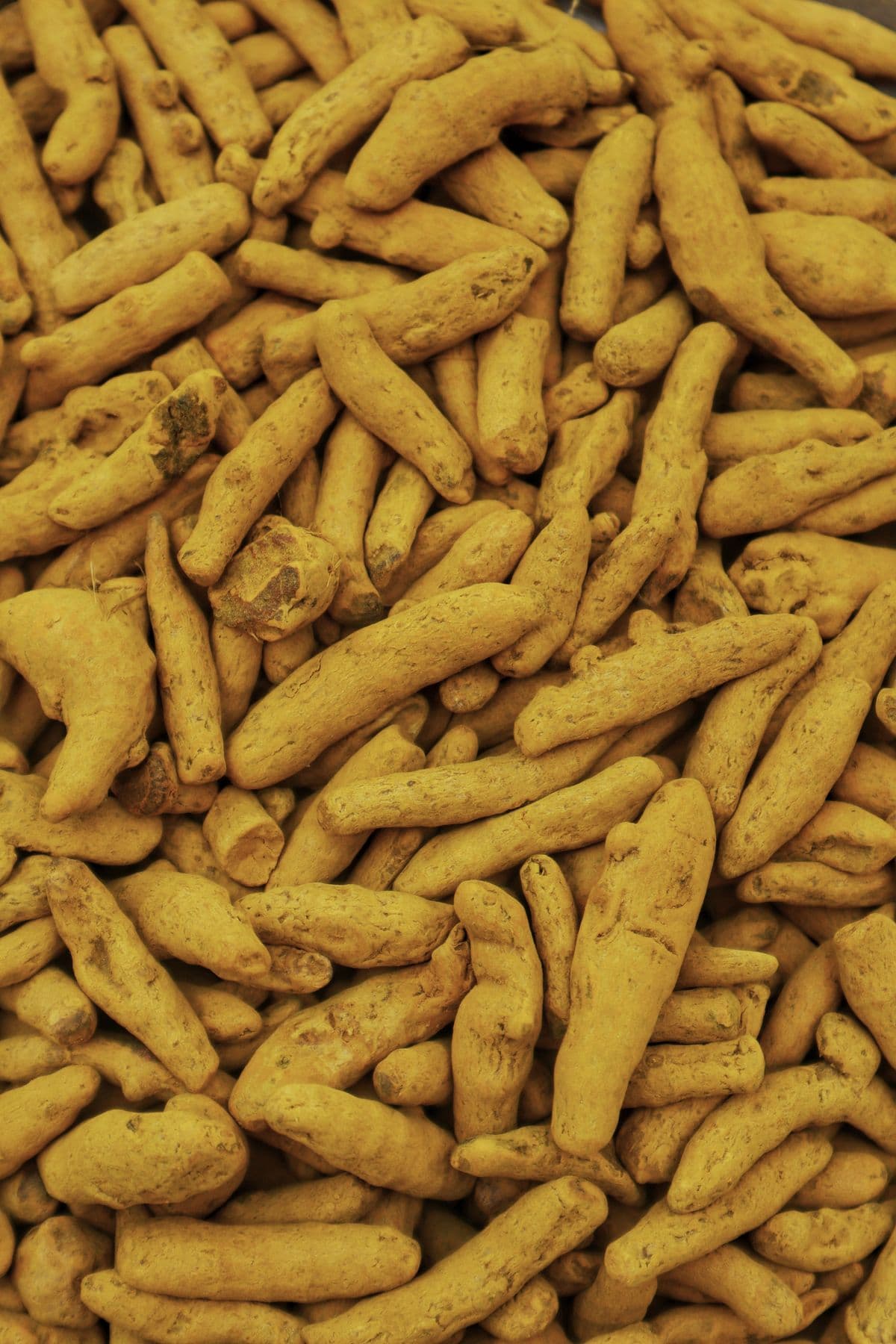
We supply whole turmeric in finger and bulb form, polished and unpolished, and ground turmeric powder at specified mesh sizes. Curcumin content is specified as a minimum percentage and verified by laboratory analysis on the shipped lot. Colour is specified where the buyer's application depends on it, since turmeric bought for its colouring power is a different purchase from turmeric bought for flavour or for nutraceutical extraction.
The buyers we serve are spice importers and repackers, food manufacturers using turmeric as an ingredient or colourant, nutraceutical and extraction companies buying for curcumin recovery, retail and private-label brands, and food service and institutional buyers. Their specifications differ substantially: an extraction buyer cares about curcumin above everything, a retail packer cares about colour and cleanliness, and a food manufacturer cares about microbial counts and residue compliance.
Curcumin content, grades and origin characteristics
Curcumin is the active and commercially significant component of turmeric, and its content varies with variety, growing region, growing conditions and post-harvest handling. Indian turmeric spans a wide curcumin range, and varieties from certain regions are recognised for consistently higher content. We specify a minimum curcumin percentage in the contract and verify it by analysis rather than relying on a regional name as a proxy for content.
Grade terminology in the turmeric trade is inconsistent and regionally specific, which creates genuine confusion in international contracts. Rather than relying on trade grade names alone, we define quality by measurable parameters: curcumin percentage, moisture content, total ash and acid-insoluble ash, extraneous matter, admixture, insect damage, mould, and colour value where relevant. A specification written this way means the same thing to both parties.
Finger and bulb are the two physical forms of whole turmeric, and they are not equivalent. Fingers are the secondary rhizomes and are generally preferred for appearance and for grinding, while bulbs are the primary rhizome and can differ in curcumin content and grinding behaviour. Polished turmeric has been mechanically polished to remove the outer skin and improve appearance; unpolished retains it. We specify form and polish state explicitly because both affect price and end use.
For extraction buyers the economics are driven almost entirely by curcumin yield, so the specification is written around it: minimum curcumin percentage, moisture, and freedom from adulteration that would interfere with extraction. For these buyers we can arrange analysis of representative samples before shipment and, where volumes justify it, pre-shipment sampling by a third party the buyer nominates.
Cleaning, processing and adulteration control
Cleaning is where a great deal of the value is added and where cost differences between suppliers originate. Raw turmeric arrives from farms with soil, stones, dust, plant material, and occasionally metal fragments and other foreign matter. Processing involves destoning, gravity separation, magnetic separation, sieving to remove dust and fines, and optical sortex sorting to remove discoloured, damaged and foreign material. Each stage costs money and each stage is one that a cheaper supplier can omit.
We specify the cleaning process and the resulting purity level, with extraneous matter and admixture stated as maximum percentages and verified by analysis. Metal detection is applied to ground product, and magnetic separation to whole product. Where a buyer's own quality system requires specific cleaning steps or purity levels, we route the order to a processor equipped to deliver and evidence them.
Adulteration is a real risk in turmeric and it has caused serious public health incidents internationally. The specific concerns are added colourants used to enhance appearance, including synthetic dyes that are illegal in food, and lead compounds historically used to brighten colour, which are acutely toxic. We test for unauthorised colourants and for lead specifically on turmeric, because this is a known adulteration route and testing for it is a basic duty rather than an optional extra.
Starch and flour adulteration of ground turmeric is another known practice, diluting the product and reducing curcumin content. It is detected by microscopic examination, by curcumin analysis against expected values, and by starch identification testing. Because ground product is far easier to adulterate than whole, buyers wanting maximum assurance are sometimes better served buying whole and grinding themselves, and we say so where it is relevant to their situation.
Grinding, mesh size and colour retention
Ground turmeric is specified by mesh size, and mesh affects both application performance and colour appearance. Coarser grinds suit some culinary applications and are less prone to caking; finer grinds disperse better in liquids and appear more intensely coloured. We specify the mesh distribution rather than a single nominal figure, since a product described as a single mesh number can vary widely in its actual distribution.
Grinding generates heat, and heat degrades both curcumin and volatile oil. High-speed grinding without temperature control produces a product that is measurably lower in curcumin and duller in colour than the whole spice it came from, which is a loss the buyer pays for. Cryogenic and temperature-controlled grinding preserves both, at additional cost, and we specify it where the buyer's application justifies the difference.
Colour is measurable and worth specifying for buyers whose application depends on appearance. Turmeric's colour can be assessed instrumentally, and specifying a colour value gives a far more reliable basis for acceptance than a visual comparison against a retained sample that itself fades over time. For colourant applications we recommend specifying both curcumin content and a colour value.
Colour and curcumin both degrade in storage, particularly with exposure to light, heat and oxygen. Ground turmeric degrades considerably faster than whole. We advise buyers on realistic shelf life, specify packaging that provides light and moisture barrier, and schedule production close to shipment rather than shipping stock that has been held. For buyers whose turnover is slow, whole turmeric with local grinding is often the better commercial choice.
Microbial safety and sterilisation
Spices are agricultural products dried in the open and they carry microbial loads. Turmeric can carry total plate counts, yeasts and moulds, coliforms and, of particular concern to food manufacturers, Salmonella. Most industrial and retail buyers in regulated markets require microbial specifications, and meeting them reliably requires a sterilisation step rather than good luck in cleaning.
Steam sterilisation is the standard treatment, applying saturated steam under controlled conditions to reduce microbial load while preserving the spice's characteristics better than harsher methods. It typically achieves substantial reduction in total plate count and yeast and mould, and elimination of Salmonella when properly applied and validated. We specify the treatment, require validation evidence, and test the treated lot rather than assuming the treatment worked.
Some markets permit other treatments including irradiation and ethylene oxide fumigation, and others prohibit them. Requirements differ substantially by destination and the consequences of getting it wrong are serious, including consignment rejection and regulatory action. We confirm what the destination market permits and requires before production, specify accordingly, and document the treatment applied on the certificate of analysis.
Post-treatment recontamination is a real risk that is often overlooked. A sterilised spice packed in a non-hygienic environment or in inadequate packaging can be recontaminated before it reaches the buyer. We require that sterilisation and packing occur in a controlled sequence in a hygienic facility, and that packaging provides an effective barrier, because sterilising and then recontaminating is worse than useless since it creates a false assurance.
Residues, contaminants and documentation
Pesticide residues are the most common reason a spice consignment is rejected at import in regulated markets. Maximum residue limits differ substantially between markets, and a residue level acceptable in one destination will cause rejection in another. We establish the destination's applicable limits before production, source from growers and processors whose practices are compatible with them, and test the lot against the relevant limit list.
Testing scope is set against the destination's requirements and typically covers a multi-residue pesticide screen, heavy metals including lead, cadmium, arsenic and mercury, aflatoxins and other mycotoxins where relevant, unauthorised colourants and dyes, and microbiological parameters. For turmeric specifically, lead testing and colourant screening are non-negotiable in our view given the known adulteration history.
Every lot ships with a certificate of analysis covering the agreed parameters with actual measured values, not ranges or claims. Additional documentation includes the phytosanitary certificate, certificate of origin, commercial invoice and packing list, fumigation certificate where required, treatment certificate where sterilisation has been applied, and any market-specific health or export certificate. Where your importing authority requires specific certificate wording or endorsements, we confirm it before shipment.
For buyers with their own audit or certification requirements, we can route production to facilities holding recognised food safety certification, support buyer audits, and arrange third-party inspection and sampling at loading. Organic certification is available where the buyer requires it and the supply chain can be verified, with the certification body and scope stated rather than an unsupported organic claim.
Packaging, storage and shipping
Turmeric is hygroscopic and light-sensitive, and packaging has to address both. Whole turmeric is typically packed in new jute bags with liner, or in woven polypropylene bags with polyethylene liner, in 25 or 50 kilogram units. Ground turmeric requires a better barrier and is packed in multi-layer paper bags with polyethylene liner, in lined woven bags, or in aluminium-foil laminate for maximum barrier where shelf life matters. Retail and private-label packs are produced to your specification.
Moisture control is critical because turmeric above its safe moisture limit will develop mould in transit, particularly in a container crossing tropical waters where condensation is significant. We specify a maximum moisture content, verify it before packing, and use container desiccants and liner protection on long or humid routes. A consignment that arrives mouldy is usually a moisture specification failure rather than bad luck.
Container loading and hygiene matter more in food products than buyers often expect. Containers are inspected for cleanliness, odour, previous cargo residue, damage and water-tightness before loading, since a container that previously carried a strongly odorous cargo will taint spices. Loading is planned to prevent bag damage and to allow air movement where appropriate, and dunnage and liner are specified.
Documentation and traceability run to lot level. Each bag is marked with product, grade, lot number, net weight, packing date and origin, linking to the certificate of analysis for that lot. For food products this traceability is a regulatory requirement in most destination markets rather than a service, and we maintain it as standard rather than on request.
Buying turmeric through VP Global Exim
Tell us the form you need, the minimum curcumin content, the mesh if ground, the microbial and residue limits your market applies, whether sterilisation is required and which method is permitted, your packaging requirement, the quantity and the destination. From that we can write a specification, quote against it, and tell you what is realistically achievable at what price, because curcumin content and residue compliance both have real cost consequences.
We are direct about the trade-offs. Higher curcumin, tighter residue limits, validated sterilisation and finer cleaning all cost money, and a price substantially below the market for a stated specification usually means one of them is not being delivered. Where a buyer's target price and specification cannot coexist, we say which parameter would have to move rather than accepting the order and hoping the analysis passes.
First orders are best placed with pre-shipment sample analysis and, where the buyer wishes, third-party sampling at loading. That establishes the specification is genuinely being met before the goods are on the water, which for a food product is a considerably better position than discovering a problem at import inspection.
Turmeric specifications
| Forms | Whole fingers and bulbs, polished or unpolished; ground powder at specified mesh distribution |
|---|---|
| Curcumin | Minimum percentage specified in contract and verified by laboratory analysis on the shipped lot |
| Quality parameters | Moisture, total ash, acid-insoluble ash, extraneous matter, admixture, insect damage, mould and colour value |
| Cleaning | Destoning, gravity and magnetic separation, sieving, optical sortex sorting, metal detection on ground product |
| Sterilisation | Validated steam sterilisation available; treatment method confirmed against destination market permissions |
| Adulteration screening | Unauthorised colourant and synthetic dye testing, lead testing, starch and flour adulteration detection |
| Residue testing | Multi-residue pesticide screen against destination limits, heavy metals, mycotoxins where relevant |
| Grinding | Temperature-controlled and cryogenic grinding available to preserve curcumin and volatile oil |
| MOQ | From 1 MT per specification; container-load quantities standard for whole turmeric |
| Lead time | 20-35 days subject to harvest availability, sterilisation and laboratory turnaround |
Made to your requirements
- Specification written to your curcumin, residue and microbial requirements
- Validated steam sterilisation with treatment certification
- Mesh distribution and temperature-controlled grinding
- Private-label and retail packaging
- Third-party sampling and inspection at loading
- Organic certified supply where the chain can be verified
Where our turmeric is used
Typical buyer profiles and end uses we supply into.
Turmeric export questions
The questions buyers ask most often before placing a first order.
Why isn't a regional origin name enough to specify turmeric?
Because an origin name tells you nothing measurable about the lot you receive. Curcumin content, moisture, microbial load and pesticide residues all vary within a region and between seasons. We contract against a written specification with minimum curcumin stated and verified by laboratory analysis on the shipped lot, which is the only basis a food buyer can responsibly accept goods on.
Do you test for adulteration specifically?
Yes, and for turmeric we regard it as mandatory rather than optional. The known risks are added synthetic colourants that are illegal in food, and lead compounds historically used to brighten colour, which are acutely toxic. We test for unauthorised colourants and for lead on every turmeric lot, along with starch and flour adulteration detection on ground product.
Is ground or whole turmeric the better purchase?
It depends on your turnover and your assurance requirements. Ground product is far easier to adulterate and degrades considerably faster in colour and curcumin. If your stock turn is slow or you want maximum assurance, buying whole and grinding locally is often better, and we will say so rather than pushing ground product because it carries more processing margin.
How does grinding affect quality?
Grinding generates heat, and heat degrades both curcumin and volatile oil, so high-speed grinding without temperature control produces measurably lower curcumin and duller colour than the whole spice it came from. Temperature-controlled and cryogenic grinding preserve both at additional cost, and we specify it where your application justifies the difference.
Which sterilisation method should I request?
Whichever your destination market permits, which differs substantially by country. Steam sterilisation is the standard and is widely accepted; irradiation and ethylene oxide are permitted in some markets and prohibited in others. We confirm what your destination allows and requires before production, specify accordingly, and state the treatment applied on the certificate of analysis.
What causes a spice consignment to be rejected at import?
Most often pesticide residues, because maximum residue limits differ substantially between markets and a level acceptable in one destination fails in another. We establish the applicable limits before production, source from growers and processors whose practices suit them, and test the lot against the destination's own limit list rather than a generic one.
Request a quote: Turmeric
Send your specification, quantity and destination market. We confirm feasibility, quote with a lead time and propose a sampling plan so your first order is judged on an approved sample.
- Response within 24 hours
- Samples before bulk commitment
- Full export documentation handled
Enquire about Turmeric
Pre-filled for this product - just add your details.