Chilli
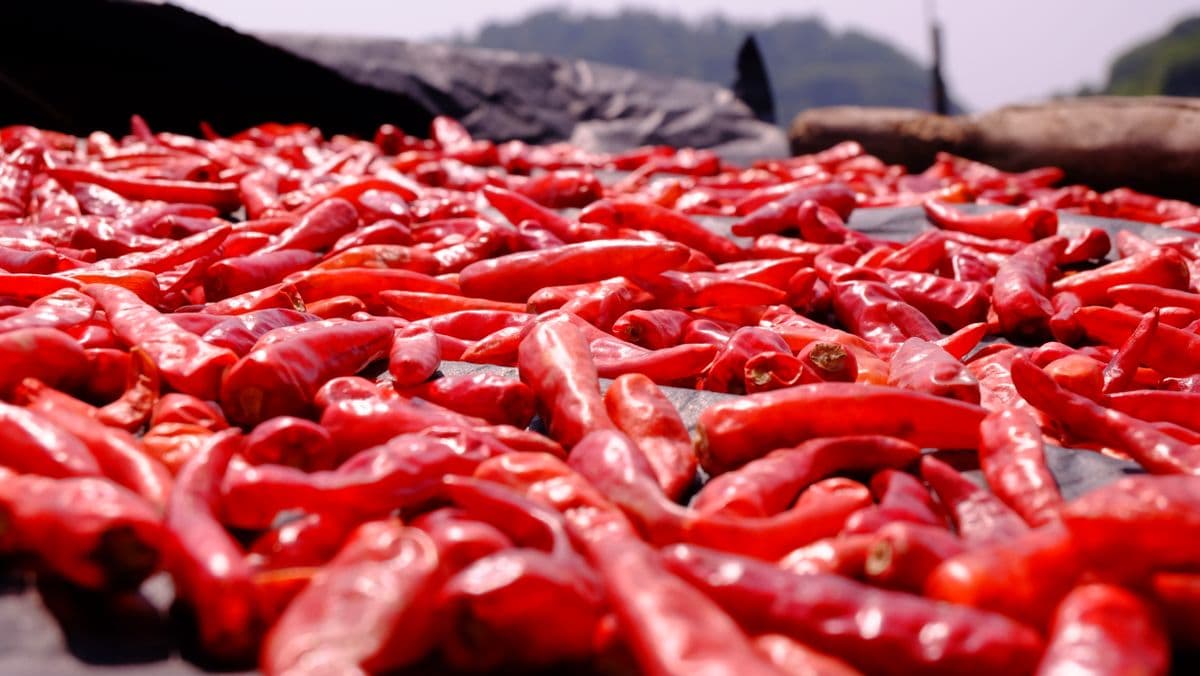
Whole dried red chillies and chilli powder specified by heat level and colour value, cleaned and tested lot by lot for aflatoxin, residues and microbial parameters.
At a glance
- Heat specified in Scoville or capsaicin content
- ASTA colour value specified and tested
- Whole with stem, stemless, stem-cut, broken and powder
- Aflatoxin testing on every lot
- Steam sterilisation available for microbial reduction
Chilli is specified by heat and colour
Chilli is bought for two distinct properties, and the commercial mistake buyers make most often is failing to separate them. Heat comes from capsaicinoids and is measured in Scoville heat units or as capsaicin content. Colour comes from carotenoid pigments and is measured as an ASTA colour value. Some chilli varieties are hot with modest colour, some are intensely coloured with mild heat, and buyers need to specify which property their application depends on rather than asking for good quality chilli.
VP Global Exim supplies dried red chilli from India, which is the world's largest producer and exporter, in the forms the trade actually uses: whole chillies with stem, whole stemless, stem-cut, broken chilli, chilli flakes and crushed chilli, and ground chilli powder at specified mesh. Both heat and colour are stated in the contract and verified by laboratory analysis on the shipped lot.
The buyers we serve include spice importers and repackers, food manufacturers using chilli as an ingredient, sauce, paste and condiment producers, oleoresin and capsaicin extraction companies, retail and private-label brands, and food service buyers. An extraction buyer wants maximum capsaicin, a paprika-substitute buyer wants maximum colour with minimum heat, and a retail packer wants an attractive appearance with consistent heat. These are three different products.
Varieties, heat levels and colour values
India grows a wide range of chilli varieties with genuinely different characteristics, and variety selection is the primary specification decision. Some varieties are known for high colour with moderate heat and are used where a rich red appearance matters; others carry high heat and are used where pungency is the objective; others again offer a balance suited to general culinary use. Rather than relying on variety names alone, which vary regionally, we specify the measured parameters and use variety as the means of achieving them.
Heat is specified either as a Scoville heat unit range or as a capsaicin content percentage, and it is tested by chromatographic analysis rather than estimated. Specifying a range rather than a single figure is realistic, because natural agricultural variation means a single value cannot be guaranteed. We agree a range that the buyer's application tolerates and verify the lot falls within it.
Colour is specified as an ASTA colour value, determined by extraction and spectrophotometric measurement. This matters greatly for buyers whose product's appearance depends on the chilli, including sauce, seasoning and snack manufacturers. Colour degrades in storage with exposure to light, heat and oxygen, so a colour value measured at shipment will decline over time, and buyers should specify with that in mind rather than at their minimum acceptable level.
The relationship between appearance and measured colour is worth understanding. A chilli that looks bright red is not necessarily high in ASTA colour, and a duller-looking lot can measure well. Visual assessment is useful for detecting defects but not for grading colour, which is why instrumental measurement is the basis we contract on. Where a buyer insists on visual approval, we supply samples alongside the analysis so both are available.
Form, stem treatment and physical grading
Physical form affects both price and application. Whole chillies with stem are the traditional form, and the stem protects the pod and is preferred in some markets. Stemless and stem-cut chillies have the stem removed or trimmed, reducing weight of non-product material and suiting grinding and processing. Broken chilli and chilli flakes are lower-priced forms used in processing, and powder is the most processed and most easily adulterated form.
Physical grading parameters we specify include pod length and appearance where relevant, moisture content, proportion of broken and damaged pods, discoloured and blackened pods, mould-affected pods, extraneous matter, admixture with other varieties, insect damage and infestation, and seed content. Seed content matters for extraction buyers and for powder appearance, since seeds dilute both colour and heat.
Moisture content is the parameter that most affects storage stability. Chilli above safe moisture develops mould and can develop aflatoxin, so we specify a maximum moisture and verify it before packing. Correctly dried chilli is brittle; chilli that feels leathery is above safe moisture, and while that is a useful field indicator, we measure rather than judge.
Insect infestation is a persistent issue in stored chilli and requires active management. Fumigation before packing is standard practice where permitted, storage in clean, treated warehouses is essential, and the packed product must be protected from re-infestation. We specify fumigation where the destination permits it and supply the fumigation certificate, and where a market prohibits particular fumigants we use permitted alternatives and adjust the storage and shipping plan accordingly.
Aflatoxin and mycotoxin control
Aflatoxin is the single most serious quality risk in dried chilli and the most common cause of import rejection in regulated markets. It is produced by moulds that grow on chilli when it is dried or stored above safe moisture, it is highly toxic and carcinogenic, and it is not removed by cooking or processing. Regulated markets set strict maximum limits and enforce them by testing at import.
Control begins in the field and at drying. Chilli dried on the ground in humid conditions, rained on during drying, or stored before it is fully dry is at high risk. We source from processors who control drying and storage, we specify maximum moisture, and we test every lot for total aflatoxins and for aflatoxin B1 individually, since many markets set a separate and lower limit for B1.
Sampling for aflatoxin has to be done properly because contamination is heterogeneous: a few heavily contaminated pods in a large lot can exceed the limit while most of the lot is clean. That means a small sample can easily miss it. We use statistically valid sampling plans with adequate incremental sample numbers taken across the lot, because a favourable result from a poorly drawn sample is worse than no result at all as it creates false confidence.
Ochratoxin A is a further mycotoxin concern in some markets and is tested where the destination requires it. Where a buyer's market applies limits on multiple mycotoxins, we test against the full applicable list rather than only for aflatoxin, and we state the tested parameters and measured values on the certificate of analysis.
Cleaning, sterilisation and processing
Cleaning of whole chilli includes removal of dust, soil, stones, plant material and foreign matter by air classification, gravity separation, destoning, sieving and magnetic separation, followed by manual or optical sorting to remove discoloured, mouldy, damaged and infested pods. Sorting is where much of the quality difference between suppliers lies, and it is labour intensive, so it is also where cost is cut.
Steam sterilisation is available for both whole and ground chilli and is the standard method for microbial reduction in markets that require it. Chilli's microbial specification typically covers total plate count, yeasts and moulds, coliforms and Salmonella. Sterilisation must be validated and the treated lot tested, and post-treatment handling must prevent recontamination, which requires a controlled sequence in a hygienic facility.
Grinding chilli produces particular challenges. Heat from grinding degrades colour and volatile compounds, capsaicin makes the process irritating and requires appropriate facility controls, and the oil content in chilli seeds can cause caking. Temperature-controlled and cryogenic grinding preserves colour and pungency better and is specified where the application justifies it. Mesh distribution is specified rather than a single nominal figure.
Adulteration of chilli powder is a known problem and is specifically tested for. The concerns are added synthetic colourants used to enhance appearance, including dyes that are illegal in food, dilution with other plant material or with brick or sand to add weight, and addition of extraneous seed or husk. We test for unauthorised colourants, verify colour and capsaicin against expected values, and conduct microscopic examination for foreign plant material.
Residues, documentation and market compliance
Pesticide residues are a major compliance risk in chilli, and some markets have historically applied enhanced import controls to Indian chilli specifically because of residue findings. That makes residue management a central part of the specification rather than a formality. We establish the destination market's applicable maximum residue limits before production, source from growers and processors whose practices are compatible, and test each lot against the destination's own limit list.
Testing scope typically covers a broad multi-residue pesticide screen, aflatoxins including B1 individually, ochratoxin A where required, heavy metals, unauthorised colourants and dyes, microbiological parameters, and the quality parameters of heat, colour and moisture. The full scope is set by the destination's requirements and the buyer's own quality system, and we agree it before production rather than testing generically and hoping it covers the requirement.
Every lot ships with a certificate of analysis stating measured values for all agreed parameters. Accompanying documentation includes the phytosanitary certificate, certificate of origin, commercial invoice and packing list, fumigation certificate, treatment certificate where sterilisation is applied, and any health or export certificate the destination requires. Where enhanced import controls apply to the product and origin, we confirm the additional documentation and testing needed before shipment.
For buyers requiring supply chain assurance, we can route production to facilities holding recognised food safety certification, support buyer audits, arrange third-party sampling and inspection at loading, and provide traceability to the processing lot and, where the chain supports it, to the growing area. Organic certified chilli is available where the supply chain can be verified, with the certification body and scope stated explicitly.
Packing, storage and transit protection
Whole chilli is bulky and light, which makes packing and container utilisation a real commercial factor. It is typically packed in new jute bags or woven polypropylene bags with liner, and compressed baling is used where volume efficiency matters, though compression must not damage the pods where appearance is being sold. Ground chilli is packed in multi-layer paper bags with polyethylene liner, lined woven bags, or foil laminate where colour retention matters.
Colour and pungency both degrade with exposure to light, heat and oxygen, and ground product degrades much faster than whole. Packaging with an effective light and oxygen barrier materially extends usable life, and we specify it where the buyer's turnover is slow. Production is scheduled close to shipment rather than shipping held stock, and we quote realistic remaining shelf life at arrival rather than at production.
Moisture protection in transit is essential. Containers crossing tropical waters generate significant condensation, and chilli above safe moisture or exposed to condensation will develop mould and potentially aflatoxin in transit. We specify container desiccants, liner protection and correct loading on humid routes, and we verify moisture before packing rather than trusting the drying process.
Container hygiene is inspected before loading, covering cleanliness, odour, previous cargo residue, damage and water-tightness. Chilli readily absorbs odours, so a container that previously carried a strongly odorous cargo is rejected. Each bag is marked with product, grade, lot number, net weight, packing date and origin, providing lot-level traceability linked to the certificate of analysis.
Specifying chilli with our team
Tell us the form, the heat range you need in Scoville or capsaicin terms, the ASTA colour value required, the moisture and physical grading parameters, your market's residue and aflatoxin limits, whether sterilisation is required and which method is permitted, packaging, quantity and destination. Being explicit about whether heat or colour is the priority is the most useful thing you can tell us, because it determines variety selection.
We will write a specification, quote against it, and be candid about achievability. High colour with low heat, tight residue limits and low aflatoxin all narrow the available supply and raise the price. Where a target price and specification cannot coexist, we will say which parameter has to move rather than accepting the order and hoping the analysis at destination is favourable.
For a first order we recommend pre-shipment sample analysis and, where the buyer wants it, third-party sampling at loading with a properly designed aflatoxin sampling plan. Given that aflatoxin is the leading rejection cause and that sampling error is the leading cause of a bad result slipping through, this is the most worthwhile precaution available in this product.
Chilli specifications
| Forms | Whole with stem, whole stemless, stem-cut, broken, flakes and crushed, and ground powder at specified mesh |
|---|---|
| Heat | Specified as a Scoville heat unit range or capsaicin content percentage, tested chromatographically |
| Colour | ASTA colour value specified and tested by extraction and spectrophotometric measurement |
| Physical grading | Moisture, broken and damaged pods, discoloured and mould-affected pods, extraneous matter, admixture, insect damage, seed content |
| Mycotoxins | Total aflatoxins and aflatoxin B1 tested on every lot using statistically valid sampling; ochratoxin A where required |
| Cleaning | Air classification, gravity separation, destoning, sieving, magnetic separation, manual and optical sorting |
| Sterilisation | Validated steam sterilisation with treated lot testing and controlled post-treatment handling |
| Adulteration screening | Unauthorised colourant and dye testing, colour and capsaicin verification, microscopic foreign matter examination |
| MOQ | From 1 MT per specification; container-load quantities standard for whole chilli |
| Lead time | 20-35 days subject to harvest availability, sterilisation and laboratory turnaround |
Made to your requirements
- Variety selection to achieve your specified heat and colour
- Stem treatment and physical form to your requirement
- Validated steam sterilisation with treatment certification
- Temperature-controlled grinding with specified mesh distribution
- Statistically valid aflatoxin sampling with third-party option
- Private-label and retail packaging
Where our chilli is used
Typical buyer profiles and end uses we supply into.
Chilli export questions
The questions buyers ask most often before placing a first order.
Should I specify heat or colour?
Both, and you should tell us which is the priority, because it determines variety selection. Heat comes from capsaicinoids measured in Scoville units or capsaicin percentage; colour comes from carotenoids measured as an ASTA value. Some varieties are hot with modest colour, others intensely coloured with mild heat. Asking for good quality chilli without separating the two is how buyers receive the wrong product.
Why is aflatoxin such a concern in chilli?
Because it is highly toxic, not removed by cooking or processing, strictly limited in regulated markets, and the leading cause of import rejection. It forms when chilli is dried or stored above safe moisture. We source from processors who control drying and storage, specify maximum moisture, and test every lot for total aflatoxins and for B1 individually, since many markets set a separate lower limit for B1.
How do you sample for aflatoxin?
Using a statistically valid plan with an adequate number of incremental samples taken across the lot. Aflatoxin contamination is heterogeneous, so a few heavily contaminated pods can exceed the limit while most of the lot is clean, and a small sample easily misses it. A favourable result from a poorly drawn sample is worse than no result, because it creates false confidence.
Can I judge chilli colour by looking at it?
Not reliably. A chilli that looks bright red is not necessarily high in ASTA colour, and a duller-looking lot can measure well. Visual assessment is useful for spotting defects but not for grading colour, which is why we contract on instrumental measurement. Where you want visual approval too, we supply samples alongside the analysis so you have both.
Is chilli powder adulterated?
It is a known risk, which is why we test for it specifically. The concerns are synthetic colourants including dyes illegal in food, dilution with other plant material or with brick or sand for weight, and added seed or husk. We test for unauthorised colourants, verify colour and capsaicin against expected values, and examine microscopically for foreign plant material.
Are there special import controls on Indian chilli?
Some markets have historically applied enhanced import controls on chilli from India because of residue and aflatoxin findings, which means additional testing and documentation at import. We confirm whether enhanced controls apply to your destination before shipment and arrange the additional testing and paperwork, rather than shipping and discovering the requirement at the border.
Request a quote: Chilli
Send your specification, quantity and destination market. We confirm feasibility, quote with a lead time and propose a sampling plan so your first order is judged on an approved sample.
- Response within 24 hours
- Samples before bulk commitment
- Full export documentation handled
Enquire about Chilli
Pre-filled for this product - just add your details.