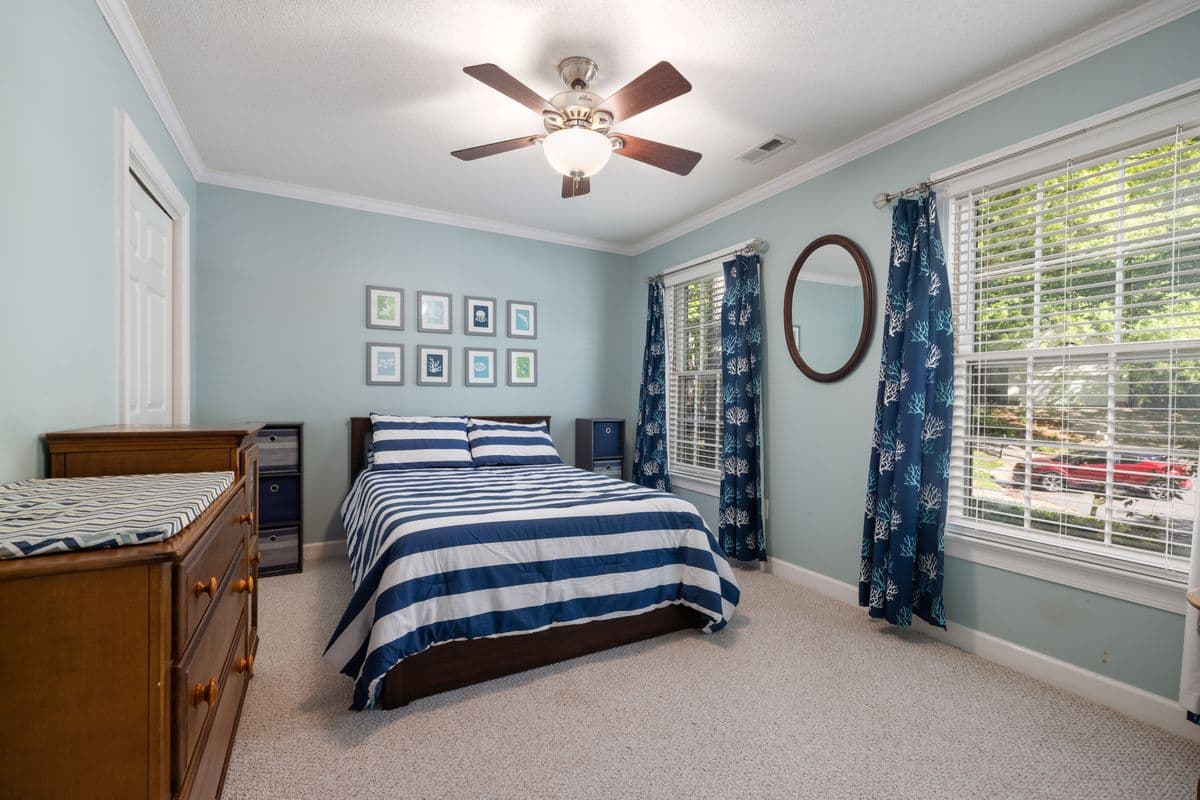
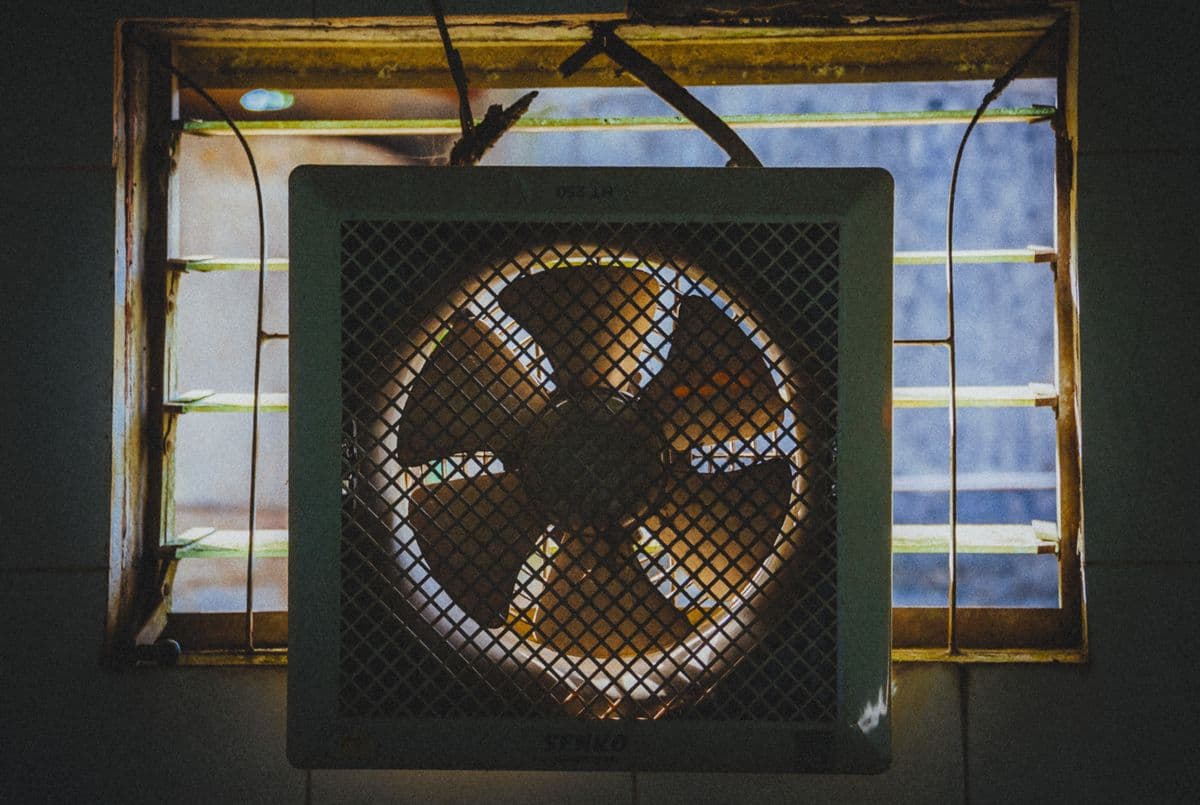
Wall & Exhaust Fans
Wall-mount, pedestal, table and exhaust fans for domestic and industrial use, specified by airflow and static pressure for ventilation duty rather than by blade size alone.
At a glance
- Wall-mount, pedestal, table, exhaust and industrial fans
- Airflow and static pressure data for ventilation sizing
- Metal and plastic body options with IP-rated variants
- Wound for destination voltage and frequency
- Guard construction verified against finger-protection standards
Two different products in one category
This category contains two products that are often confused and should not be. Circulation fans - wall-mount, pedestal and table fans - move air within a space to create a cooling draught, and they are specified by air delivery and throw. Exhaust and ventilation fans move air out of or into a space through a wall, duct or opening, and they are specified by airflow against static pressure, because they must overcome the resistance of the opening, grille or duct they work through.
Confusing the two produces the most common failure in this category: a fan sized on its free-air airflow rating installed in a ducted application, where the duct's resistance reduces actual airflow far below the rating, sometimes to a small fraction of it. VP Global Exim specifies ventilation fans against airflow at the actual system static pressure, which is the only meaningful basis.
We export the full range from India: wall-mount oscillating fans, pedestal and stand fans, table and personal fans, cabin and bracket fans, domestic exhaust fans for kitchens and bathrooms, window and wall-opening exhaust fans, industrial and heavy-duty exhaust fans in metal construction, inline and duct fans, and axial and propeller fans for industrial ventilation.
Circulation fans: air delivery and construction
Circulation fans are specified by air delivery, sweep, throw distance and oscillation coverage. Air delivery depends on blade design, pitch, motor speed and torque as with ceiling fans, and throw - the distance the airflow remains effective - depends on blade design and velocity rather than volume alone. A fan with high volume and poor velocity feels ineffective at distance, and buyers assessing fans in a showroom at close range often miss this.
Construction determines both durability and safety. Motor mounting and vibration isolation, stand and base stability on pedestal fans, oscillation mechanism quality, tilt adjustment locking, height adjustment locking on pedestal models, and blade attachment security all matter. Pedestal fan stability is a specific safety issue since a top-heavy fan on a light base tips over, and we specify base weight and diameter rather than accepting a design that looks acceptable in a box.
Guards are a safety component, not trim. The guard's wire spacing must prevent finger access to the blades, its construction must be rigid enough that it cannot be deflected into the blades, and the front and rear guards must be secured so they cannot be removed without tools where the standard requires it. We verify guard spacing and rigidity against the applicable standard because this is a product used around children.
Motor specification follows the same discipline as our other motor products: wound for destination voltage and frequency, copper windings specified explicitly, insulation class stated, thermal protection where appropriate, and capacitor value matched to the winding. Speed control by tapped winding, electronic control or remote is specified with the product rather than assumed.
Exhaust and ventilation fans: airflow against pressure
A ventilation fan's useful output is airflow delivered against the static pressure of the system it works in, and it is described by a fan curve showing airflow across a range of static pressures. Free-air airflow, with no resistance at all, is the top of that curve and it is the figure most often quoted. It is also the figure least relevant to a real installation, since every installation has some resistance.
We supply fan curves rather than single airflow figures, and we help buyers estimate their system's static pressure from the grille, louvre, duct length, bends and terminal fitting. Where a buyer is sizing a fan for a specific application - a kitchen, a bathroom, a workshop, a poultry house, a factory - we work from the required air change rate and the system resistance rather than from a nominal room size chart.
Fan type matters for the pressure required. Axial and propeller fans move large volumes at low static pressure and suit direct wall openings with minimal ducting. Centrifugal and mixed-flow fans develop higher static pressure and suit ducted installations. Fitting an axial fan to a long duct run is the classic error, and it produces a fan that runs but moves very little air. We specify the type from the application, not from the price list.
Backdraught prevention, weather protection and insect screening are part of a wall-opening installation. Shutters or backdraught dampers prevent reverse airflow when the fan is off, weather louvres prevent rain ingress, and mesh prevents insect and vermin entry, though mesh adds resistance which must be accounted for in the sizing. We specify these as part of the product rather than leaving them to be added on site, since adding a fine mesh to a marginally sized fan can halve its effective airflow.
Industrial and heavy-duty ventilation
Industrial exhaust fans differ from domestic ones in duty, construction and expected life. They run continuously rather than intermittently, they are often installed in hot, dusty or corrosive environments, they are larger, and their failure stops a process rather than causing inconvenience. Construction is accordingly heavier: metal bodies and blades, larger motors with higher insulation classes, heavier bearings, and mounting arrangements designed for the loads.
Motor duty rating matters because continuous operation at elevated ambient temperature is demanding. We specify insulation class appropriate to the ambient, adequate frame size for the rating rather than a high nameplate on a small frame, thermal protection, and bearing specification and grease type suitable for continuous high-temperature running. Bearings are the usual failure point on continuously running industrial fans.
Environmental protection is specified against the installation. Ingress protection rating for dust and moisture, corrosion protection appropriate to the atmosphere including galvanising or coating for humid and chemically aggressive environments, and where relevant construction suitable for handling hot or contaminated air. Where a fan handles a corrosive or flammable atmosphere, that is a specification requirement with safety implications and we address it explicitly rather than supplying a general-purpose fan.
Applications include factory and workshop ventilation, warehouse and godown air change, kitchen and canteen extraction, poultry and livestock house ventilation, greenhouse ventilation, welding and process fume extraction, and general industrial air movement. Agricultural ventilation in particular is demanding because of dust, ammonia and continuous duty, and it needs a specification written for it.
Noise, vibration and installation quality
Noise is a primary quality attribute for fans installed in occupied spaces. It comes from motor hum, bearing noise, aerodynamic blade noise, casing resonance and vibration transmitted into the structure. Domestic bathroom and kitchen exhaust fans in particular are judged heavily on noise, and a fan that is loud will be reported as poor quality regardless of its airflow.
We measure noise on samples at rated operating point and specify limits where the application requires quietness. Reducing noise generally involves lower blade tip speed for a given airflow, which means a larger fan running slower - a genuine engineering trade-off with a cost implication rather than a free improvement. Where a buyer wants both high airflow and low noise from a small fan, we explain the trade-off honestly.
Vibration causes both noise and premature failure. Blade and rotor balance, motor mounting, casing rigidity and, on wall-mounted fans, the quality of the mounting into the structure all matter. We check dynamic balance on samples and specify mounting arrangements with vibration isolation where appropriate, since a fan hard-mounted to a light partition wall will transmit noise through the building.
Installation quality determines a substantial share of field performance. Correct opening size, adequate clearance around the fan, proper sealing to prevent air short-circuiting around the fan body, correct ducting with minimal bends, and secure mounting are all installer responsibilities that affect the product's perceived performance. We supply written installation guidance because these failures come back as product complaints.
Safety, certification and market compliance
Electrical safety certification is required in most markets and we route production to manufacturers holding current certification for the destination. Test scope typically covers insulation and dielectric strength, earthing continuity, temperature rise under continuous operation, capacitor compliance, protection against access to live parts, mechanical strength, stability for free-standing fans, and endurance testing.
Mechanical safety on fans centres on guard design and, for pedestal models, stability. Guard wire spacing must prevent finger access, guards must resist deflection, and where a standard requires guards to be non-removable without tools, that must be verified rather than assumed. Stability testing for pedestal fans verifies that the fan does not tip when tilted or oscillating at maximum extension. Both are tested and we do not compromise on them.
Energy labelling and minimum performance requirements are extending to ventilation and circulation fans in some markets, requiring declared airflow and power consumption and sometimes minimum efficiency. We confirm the applicable requirement for your destination and supply compliant product with test evidence, since non-compliant product cannot be legally sold.
Documentation includes airflow and power consumption test data, fan curves for ventilation fans, safety certification for the destination market, installation and user manuals in the required language, warranty terms, and the export documentation set. Where a market requires specific rating plate, packaging or labelling content, we confirm it before production rather than after.
Packing, ranges and consolidation
Fans are bulky and light, which makes them volume-limited cargo and makes packing efficiency important. Products are packed with components separated where the design allows, blades and guards protected against deformation, motor housings wrapped to protect finishes, stands and poles packed to avoid bending, and hardware bagged with the instruction. Cartons are designed so stacking load passes through the carton rather than through the guard.
Because fans fill a container before reaching its weight limit, consolidation with dense cargo is genuinely valuable. Fans pair well with fasteners, tiles, motors, sanitary ware or other dense products, and we plan mixed loads to use both the volume and the weight capacity. For a distributor buying across categories, this is usually the single biggest lever on landed cost.
For range building we help assemble a coherent offer across price points and applications: domestic exhaust fans in common sizes, wall and pedestal circulation fans in the sizes local customers buy, industrial exhaust fans in metal construction, and the accessories including shutters, louvres, mesh and mounting frames that complete an installation. Supplying accessories with the fans avoids the situation where a fan cannot be installed because the frame or shutter is missing.
Private-label supply covers rating plates, packaging design and printing, and manuals. As with ceiling fans, declared airflow and power consumption printed on packaging are commercial claims the buyer becomes responsible for, so we ensure printed figures match tested values rather than optimistic catalogue numbers.
Specifying fans with our team
For circulation fans, tell us the types and sizes, the destination supply, required air delivery, finish and appearance direction, whether remote or electronic speed control is needed, and certification requirements. For ventilation fans, tell us the application, the room or space volume and required air change rate, the installation type including duct length and fittings, whether shutters, louvres or mesh are needed, the ambient conditions, and the duty pattern.
That last set of questions matters because it determines the static pressure the fan must work against, which determines whether the fan will actually ventilate the space. We will size against the system rather than against a nominal room chart, supply the fan curve, and state the expected airflow at the estimated system pressure rather than the free-air figure.
Where a requirement is inconsistent, we say so. An axial fan on a long duct run, a marginally sized fan with a fine insect mesh added, a domestic-grade fan specified for continuous industrial duty, or a small fan expected to deliver high airflow quietly are all requests we receive, and in each case explaining the problem before shipment is considerably more useful than supplying what was asked for.
Wall & Exhaust Fans specifications
| Circulation fans | Wall-mount oscillating, pedestal and stand, table and personal, cabin and bracket fans |
|---|---|
| Ventilation fans | Domestic kitchen and bathroom exhaust, window and wall-opening exhaust, industrial metal-body exhaust, inline duct, axial and propeller fans |
| Ventilation sizing | Fan curves supplied showing airflow across static pressure range, with sizing against actual system resistance |
| Fan type selection | Axial and propeller for low static pressure direct openings; centrifugal and mixed flow for ducted installations |
| Supply | Wound for destination voltage and frequency with copper windings, stated insulation class and matched capacitor |
| Industrial duty | Metal body and blades, insulation class for ambient, adequate frame size, thermal protection, bearing and grease specification for continuous running |
| Safety | Guard wire spacing and rigidity verified, pedestal stability tested, electrical safety certification for the destination market |
| Accessories | Backdraught shutters, weather louvres, insect mesh and mounting frames specified with resistance accounted for in sizing |
| MOQ | 200-500 units per model for domestic; 50-100 for industrial models; consolidated per container |
| Lead time | 35-50 days depending on model, winding specification and certification requirements |
Made to your requirements
- Ventilation fans sized against your actual system static pressure
- Windings for any destination voltage and frequency
- Industrial duty specification for continuous and high-ambient operation
- Corrosion protection for humid, coastal and agricultural environments
- Accessory packages with shutters, louvres, mesh and frames
- Private-label rating plates, packaging and manuals
Where our wall & exhaust fans is used
Typical buyer profiles and end uses we supply into.
Wall & Exhaust Fans export questions
The questions buyers ask most often before placing a first order.
Why is free-air airflow the wrong figure to compare?
Because it assumes no resistance, and every real installation has some. Grilles, louvres, mesh, duct length and bends all create static pressure that reduces actual airflow, sometimes to a small fraction of the free-air rating. We supply fan curves showing airflow across the pressure range and size against your actual system resistance rather than quoting the top of the curve.
Can I use an axial fan on a duct run?
Generally not. Axial and propeller fans move large volumes at low static pressure and suit direct wall openings with minimal ducting. Ducted installations need centrifugal or mixed-flow fans that develop higher static pressure. Fitting an axial fan to a long duct is the classic error and produces a fan that runs but moves very little air.
Does adding insect mesh affect performance?
Yes, significantly. Mesh adds resistance, and adding a fine mesh to a marginally sized fan can halve its effective airflow. Shutters, louvres and mesh are all part of the system resistance and must be accounted for in sizing. We specify these accessories as part of the product rather than leaving them to be added on site where they undermine the sizing.
How do you assess fan guard safety?
By verifying wire spacing against the applicable standard so fingers cannot reach the blades, checking that the guard is rigid enough not to deflect into the blades, and confirming that guards are secured so they cannot be removed without tools where the standard requires it. This is a product used around children, so we do not treat guards as trim.
Why are pedestal fans a stability concern?
Because a top-heavy fan on a light base tips over, particularly when oscillating at maximum height and tilt. It is a genuine safety issue rather than a quality nicety. We specify base weight and diameter rather than accepting a design that looks adequate in its carton, and stability testing verifies the fan does not tip when tilted or oscillating at full extension.
Can I have high airflow and low noise from a small fan?
Not without a trade-off. Reducing noise for a given airflow generally means lower blade tip speed, which means a larger fan running slower, an engineering trade-off with a cost implication rather than a free improvement. Where both are required from a small fan we explain the trade-off honestly rather than quoting optimistic figures.
Request a quote: Wall & Exhaust Fans
Send your specification, quantity and destination market. We confirm feasibility, quote with a lead time and propose a sampling plan so your first order is judged on an approved sample.
- Response within 24 hours
- Samples before bulk commitment
- Full export documentation handled
Enquire about Wall & Exhaust Fans
Pre-filled for this product - just add your details.