Solar Panels
Photovoltaic modules from Indian manufacturers, supplied with IEC certification, per-module flash test data and warranty terms that are actually documented.
At a glance
- 50 W to 550 W and above in mono PERC and polycrystalline
- Half-cut cell, bifacial and multi-busbar technologies
- IEC 61215 and IEC 61730 certification with test reports
- Flash test data supplied per module with serial numbers
- Product and performance warranty terms documented in writing
Modules bought on certification and data
A solar module is a twenty-five-year product sold on a specification that cannot be verified by looking at it. Its rated power, its actual power, its degradation rate, its resistance to humidity and thermal cycling, and whether its warranty means anything are all matters of documentation and manufacturer standing rather than appearance. VP Global Exim supplies PV modules on that basis: certified product, per-module flash test data, documented warranty terms, and a manufacturer we can stand behind.
India has built substantial module manufacturing capacity and is now a significant exporter, with quality ranging from world-class to poor. That range is the buyer's central problem, and it is not resolvable by comparing datasheets, because datasheets are cheap to produce. We work with manufacturers whose certification is current and verifiable, whose factory processes we have assessed, and whose warranty is backed by a business likely to exist when a claim is made.
The range covers monocrystalline PERC modules across the mainstream residential and commercial power classes, polycrystalline modules where cost leads, half-cut cell and multi-busbar designs, bifacial modules with glass-glass or transparent backsheet construction for ground-mount and elevated installations, and small modules from around 50 watts for street lighting, pumping, telecom and off-grid applications. Framed and frameless options are available depending on the mounting system.
Cell technology and module construction
Monocrystalline PERC cells dominate current supply and offer higher efficiency than polycrystalline for the same area, which matters when roof space is limited. Polycrystalline modules remain available and are cheaper per watt in some markets, and where area is not constrained they can be the economically correct choice. We quote both where the application allows, rather than pushing whichever technology carries more margin.
Half-cut cell construction divides each cell in two, halving the current through each and reducing resistive losses, while also improving shade tolerance because the module operates as two parallel halves. Multi-busbar designs reduce resistive loss further. These are genuine efficiency improvements rather than marketing, and they are now standard on most current modules, so their absence on a module offered at a current-generation price is worth questioning.
Bifacial modules generate from both faces, capturing light reflected from the ground behind the module. The additional yield is real but highly dependent on installation: mounting height, ground albedo, row spacing and tilt all determine it, and a bifacial module installed flush on a dark roof gains almost nothing. We are explicit about this because bifacial gain is frequently oversold, and a buyer paying a bifacial premium for a rooftop installation is usually wasting money.
Construction details determine long-term reliability more than efficiency does. Glass thickness and whether the module is glass-glass or glass-backsheet, encapsulant quality, backsheet material and specification, frame section and anodising thickness, junction box rating and sealing, cable specification and connector type and rating all matter over twenty-five years. We specify these rather than accepting a datasheet that lists only power and efficiency.
Certification, testing and verification
Design qualification certification to the IEC 61215 series and safety qualification to IEC 61730 are the baseline requirements, and a module without current certification from a recognised laboratory should not be bought at any price. These standards test the module through thermal cycling, humidity freeze, damp heat, mechanical load, hail impact, insulation and wet leakage, and hot-spot endurance. They are the closest available proxy for whether a module survives its design life.
We verify certification rather than accepting a certificate image. Certificates are checked for validity, for the specific module types and power classes covered, for the manufacturing locations listed, and for currency, because certificates expire and are sometimes presented for a similar but different model. A certificate covering a 400 watt module does not cover a 550 watt module of the same series.
Additional certifications are arranged where the market or application requires them: salt mist corrosion resistance for coastal installations, ammonia resistance for agricultural environments, sand and dust resistance, PID resistance testing for potential-induced degradation, and fire classification. Where a buyer's market mandates specific national certification or registration for PV modules, we confirm the requirement and route accordingly.
Flash test data is supplied per module with the serial number, giving the measured power, current, voltage and fill factor at standard test conditions for that specific unit rather than the model's nominal rating. This is the single most useful document a module buyer can insist on, because it shows what was actually produced. Modules are sorted into power bins, and we specify positive-tolerance-only sorting where the buyer requires it so no module is below its nameplate rating.
Performance ratings and realistic expectations
Standard test conditions ratings are laboratory figures at a specific irradiance, temperature and spectrum, and no module produces its rated power under real conditions for most of the day. The figures that predict actual behaviour are the temperature coefficients, which describe how output falls as the module heats, and the nominal operating cell temperature or equivalent rating. In hot climates, temperature coefficient matters more to annual yield than a small difference in nameplate efficiency.
We supply full electrical characteristics rather than headline power: power, voltage and current at maximum power, open circuit voltage, short circuit current, temperature coefficients for each, maximum system voltage, series fuse rating, and performance at low irradiance. Open circuit voltage and its temperature coefficient are essential for string sizing, and getting string design wrong from incomplete data damages inverters.
Degradation is specified as a first-year figure and an annual rate thereafter, and it is the basis of the performance warranty. Typical current products state a modest first-year loss and a low annual rate, with an end-of-warranty output percentage guaranteed. We supply these figures as part of the warranty documentation rather than as a marketing statement, and we point out that a performance warranty is only as good as the manufacturer's ability to honour it.
We are careful not to overstate. Module output depends on irradiance, temperature, soiling, shading, mismatch, cabling losses, inverter efficiency and installation quality, and a realistic system yield is well below the sum of module nameplate ratings. Where a buyer is sizing a system or making a commercial promise to their own customer, we encourage them to use proper yield modelling rather than nameplate arithmetic, and we will say so even though it means quoting fewer modules.
Warranty terms and manufacturer standing
PV modules carry two warranties and buyers routinely conflate them. The product warranty covers defects in materials and workmanship for a period typically measured in years and is what covers a failed junction box, a delaminating laminate or a cracked frame. The performance warranty covers output degradation over a much longer period, typically twenty-five years or more, and guarantees a minimum percentage of rated output at intervals.
We obtain warranty terms in writing and provide them to the buyer, including what is covered, what is excluded, the claim procedure, who bears freight and labour costs on a replacement, how a performance claim is measured and by whom, and what happens if the specific model is no longer produced. Warranties whose claim procedure is impractical for an overseas buyer are worth knowing about before purchase rather than at claim time.
The uncomfortable truth about long PV warranties is that they depend entirely on the manufacturer existing and being solvent in twenty years, which for many manufacturers is optimistic. We take manufacturer standing seriously in selection, preferring established manufacturers with genuine track records over new entrants offering the same paper warranty at a lower price. We tell buyers plainly where a warranty is realistically worth less than its stated term.
For buyers supplying projects where warranty backing is contractually important, we can provide manufacturer details for the buyer's own due diligence, arrange direct warranty registration in the end customer's name where the manufacturer supports it, and confirm the warranty administration route before shipment. This matters most on commercial installations where the end customer's financing may depend on it.
Packing, handling and transit damage
Modules are large, heavy, fragile in specific ways and expensive, which makes packing and handling critical. Modules are packed vertically on edge in cartons on pallets, never flat, with corner protection, edge protection and separation between modules, then strapped and secured. Vertical packing is essential because a stack of modules packed flat concentrates load on the glass and cells beneath.
The characteristic transit damage in PV modules is invisible: microcracks in the cells caused by flexing or impact, which do not show on visual inspection but reduce output and worsen over time. This is why handling discipline matters so much, and why we specify packing, loading and securing rather than leaving it to the loader. Containers are loaded with pallets secured against movement and void space filled.
For significant consignments, electroluminescence imaging can be used to detect microcracks in a sample of modules, either before shipment or on arrival. It is the only practical way to detect cracking, and for a project buyer taking a large quantity it is a proportionate check. We can arrange pre-shipment imaging where the order justifies it.
Handling guidance is supplied and matters as much as packing. Modules must be carried by their frames not their glass, never carried by the junction box or cables, never stood on, never placed face down on a hard surface, and lifted rather than dragged from the pallet. A large share of module damage happens after arrival, and providing written guidance to the buyer's installers is worth more than most warranty terms.
System components and complete supply
Most buyers need more than modules. We can supply mounting structures for roof and ground mount in aluminium and galvanised steel, DC and AC cabling with appropriate UV and temperature rating, connectors, combiner boxes and protection devices including DC isolators, surge protection and fuses, earthing components, and monitoring hardware. Supplying these together avoids the compatibility problems that arise when components are bought separately.
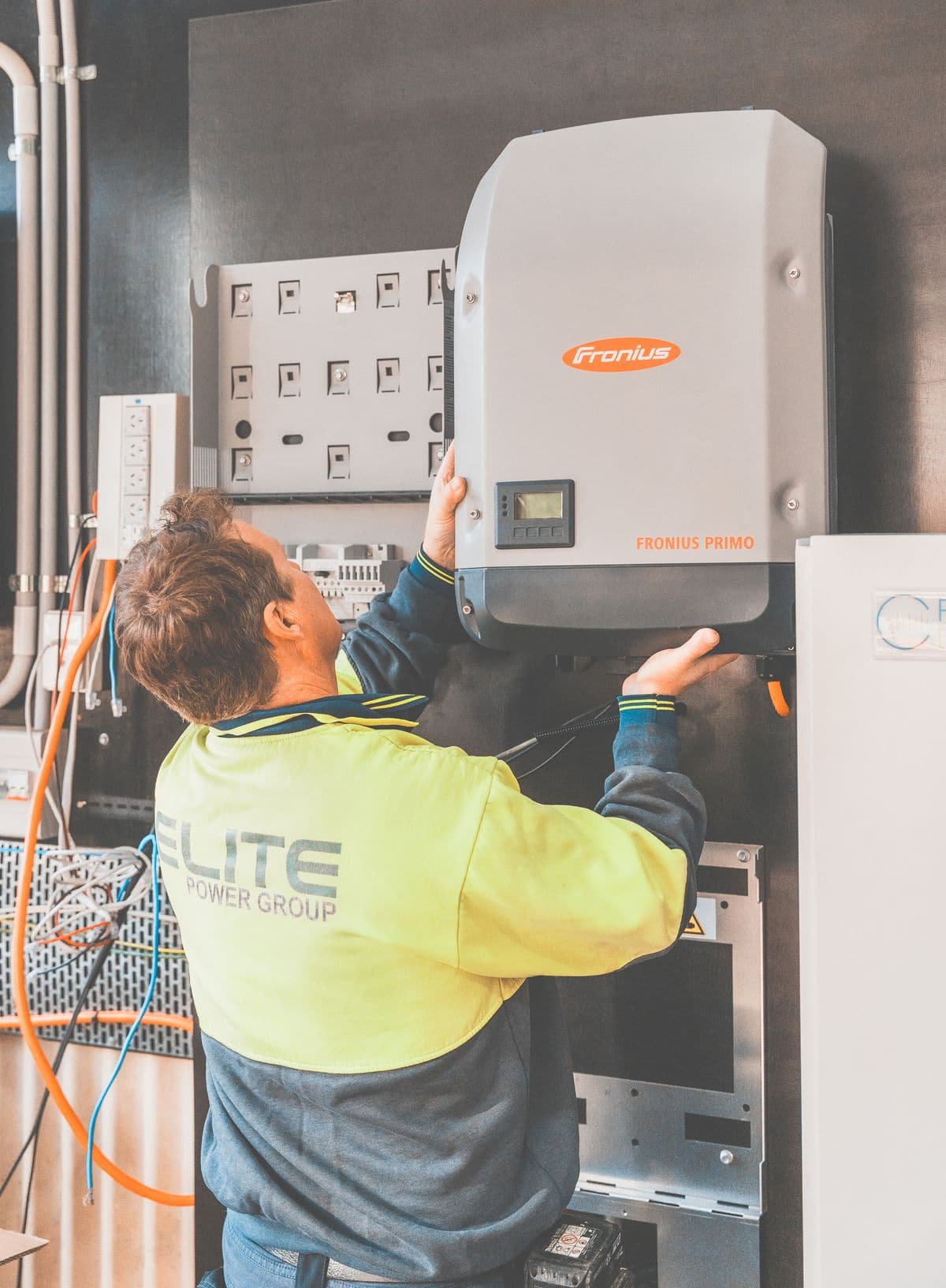
Inverters are covered in our separate solar inverter range, and matching modules to inverters is a design step we support: string voltage calculation against the inverter's operating window using the actual temperature coefficients and the site's temperature extremes, current limits per input, and total capacity ratio. Getting string sizing wrong is the most common design error in small solar systems and it either damages the inverter or wastes capacity.
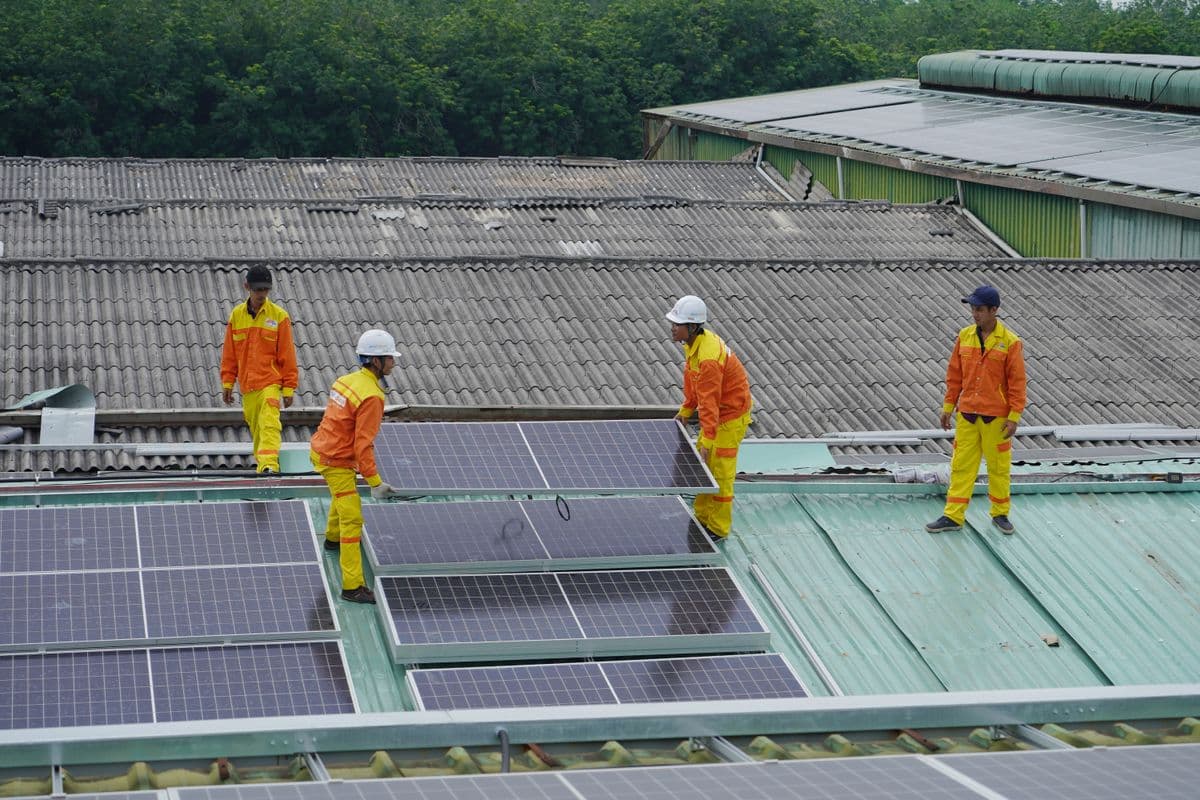
Mounting structure specification is often underestimated. It must be designed for the site's wind and, where relevant, snow loading, corrosion protection must suit the environment, and the fixing into the roof or ground must be appropriate to the structure. A module warranty is void if the module is mounted incorrectly, and a structure that fails takes the modules with it. We specify structures for the actual site conditions rather than supplying a generic frame.
For off-grid and pumping applications we can supply matched systems: modules, charge controller or pump controller, batteries where required, and the balance of system components, specified as a system rather than as parts. Off-grid systems fail most often through mismatched components and inadequate battery specification, and specifying the system as a whole prevents it.
Buying solar modules through us
Tell us the power class and technology you need, the quantity, the application and mounting type, the destination market and any national certification requirement, the site conditions including temperature extremes and coastal or agricultural exposure, whether you need balance-of-system components, and your position on warranty backing. Temperature extremes and certification requirements both materially affect which modules are suitable.
We will propose modules with full electrical characteristics, certification evidence, warranty terms in writing, and pricing per watt rather than per module so comparison is meaningful. Where a buyer is comparing our quotation against a substantially cheaper one, we will explain what typically accounts for the difference - certification currency, construction specification, flash test provision, power binning, or manufacturer standing - so the comparison is made on the right basis.
We are willing to decline. Solar is a category where uncertified and misdescribed product circulates, where warranties are frequently worthless, and where a buyer's reputation is exposed for decades. Where a buyer's target price only reaches product we would not stand behind, we say so rather than supplying it, because a failed rooftop installation damages their business far more than a lost order damages ours.
Solar Panels specifications
| Power range | 50 W to 550 W and above; small modules for lighting, pumping and telecom applications |
|---|---|
| Cell technology | Monocrystalline PERC and polycrystalline; half-cut cell and multi-busbar designs; bifacial glass-glass and transparent backsheet |
| Certification | IEC 61215 design qualification and IEC 61730 safety qualification, verified for the specific model, power class and factory |
| Additional testing | Salt mist, ammonia resistance, sand and dust, PID resistance and fire classification where required |
| Per-module data | Flash test report with serial number giving measured power, current, voltage and fill factor; positive-tolerance-only binning on request |
| Electrical characteristics | Full parameters including temperature coefficients, open circuit voltage, short circuit current, maximum system voltage and series fuse rating |
| Construction | Glass thickness and type, encapsulant, backsheet specification, frame section and anodising, junction box rating, cable and connector specification |
| Warranty | Product and performance warranty terms supplied in writing including claim procedure, cost responsibility and measurement basis |
| MOQ | One 20ft or 40ft container; smaller quantities where consolidated with other electrical products |
| Lead time | 30-50 days depending on power class, certification requirements and manufacturer scheduling |
Made to your requirements
- Module selection matched to site temperature and exposure conditions
- Positive-tolerance-only power binning
- Pre-shipment electroluminescence imaging on significant consignments
- Balance-of-system supply including structures, cabling and protection
- String sizing support against your inverter selection
- Direct warranty registration in the end customer's name where supported
Where our solar panels is used
Typical buyer profiles and end uses we supply into.
Solar Panels export questions
The questions buyers ask most often before placing a first order.
What documentation should I insist on with solar modules?
Current IEC 61215 and IEC 61730 certification verified for the specific model, power class and manufacturing location, full electrical characteristics including temperature coefficients, per-module flash test data with serial numbers, and both warranty terms in writing with the claim procedure and cost responsibility stated. A module without current certification should not be bought at any price.
Are bifacial modules worth the premium?
It depends entirely on the installation. Bifacial gain requires mounting height, reflective ground surface, adequate row spacing and appropriate tilt, and a bifacial module fitted flush on a dark roof gains almost nothing. Bifacial gain is frequently oversold, so for rooftop installations the premium is usually wasted. On elevated ground mounts over light surfaces it can be genuinely worthwhile.
Why does temperature coefficient matter more than efficiency?
Because no module produces its rated power under real conditions for most of the day, and in hot climates output falls significantly as the module heats. The temperature coefficient describes that fall, and in a hot market it affects annual yield more than a small difference in nameplate efficiency does. We supply full coefficients rather than headline power figures.
How reliable is a 25-year performance warranty?
Only as reliable as the manufacturer's continued existence and solvency, which for many manufacturers over twenty years is optimistic. We take manufacturer standing seriously in selection, preferring established producers with real track records over new entrants offering identical paper warranties more cheaply, and we tell buyers plainly where a warranty is realistically worth less than its stated term.
What is the most common hidden transit damage?
Microcracks in the cells caused by flexing or impact. They do not show on visual inspection, they reduce output, and they worsen over time. This is why modules must be packed vertically on edge rather than flat and secured against movement. For significant consignments, electroluminescence imaging is the only practical detection method and we can arrange it pre-shipment.
Can I size a system by adding up module nameplate ratings?
No, and doing so overstates yield substantially. Actual output depends on irradiance, temperature, soiling, shading, mismatch, cabling losses, inverter efficiency and installation quality. Where you are sizing a system or making a commercial promise to your own customer, use proper yield modelling. We will say this even though it usually means quoting fewer modules.
Request a quote: Solar Panels
Send your specification, quantity and destination market. We confirm feasibility, quote with a lead time and propose a sampling plan so your first order is judged on an approved sample.
- Response within 24 hours
- Samples before bulk commitment
- Full export documentation handled
Enquire about Solar Panels
Pre-filled for this product - just add your details.