Assemblies
Multi-component sub-assemblies and kits built to your bill of materials and assembly drawing, functionally tested where required, and delivered ready to fit into your own line.
At a glance
- Assembly to your bill of materials and drawing
- Component sourcing consolidated under one supplier
- Functional, leak and torque testing to your specification
- Serial numbering and full component traceability
- Kitted, part-assembled or fully built supply
Why buyers move from parts to assemblies
Buying individual components and assembling them yourself makes sense until the coordination cost exceeds the assembly cost. A single assembly containing a casting, three machined parts, a fabricated bracket, two bearings, a seal kit and a dozen fasteners means eight or more purchase orders, eight deliveries, eight quality conversations and inventory carried on every line item. VP Global Exim supplies that same assembly as one part number, one price, one delivery and one quality record.
The shift also transfers a genuine engineering burden. In a multi-component assembly, fit problems arise from tolerance stack-up between parts that were each individually within specification. When you buy components, that problem is yours to diagnose; when you buy the assembly, it is ours. We manage the stack-up, adjust the tolerance allocation across components where necessary, and deliver an assembly that functions rather than a set of parts that each conform.
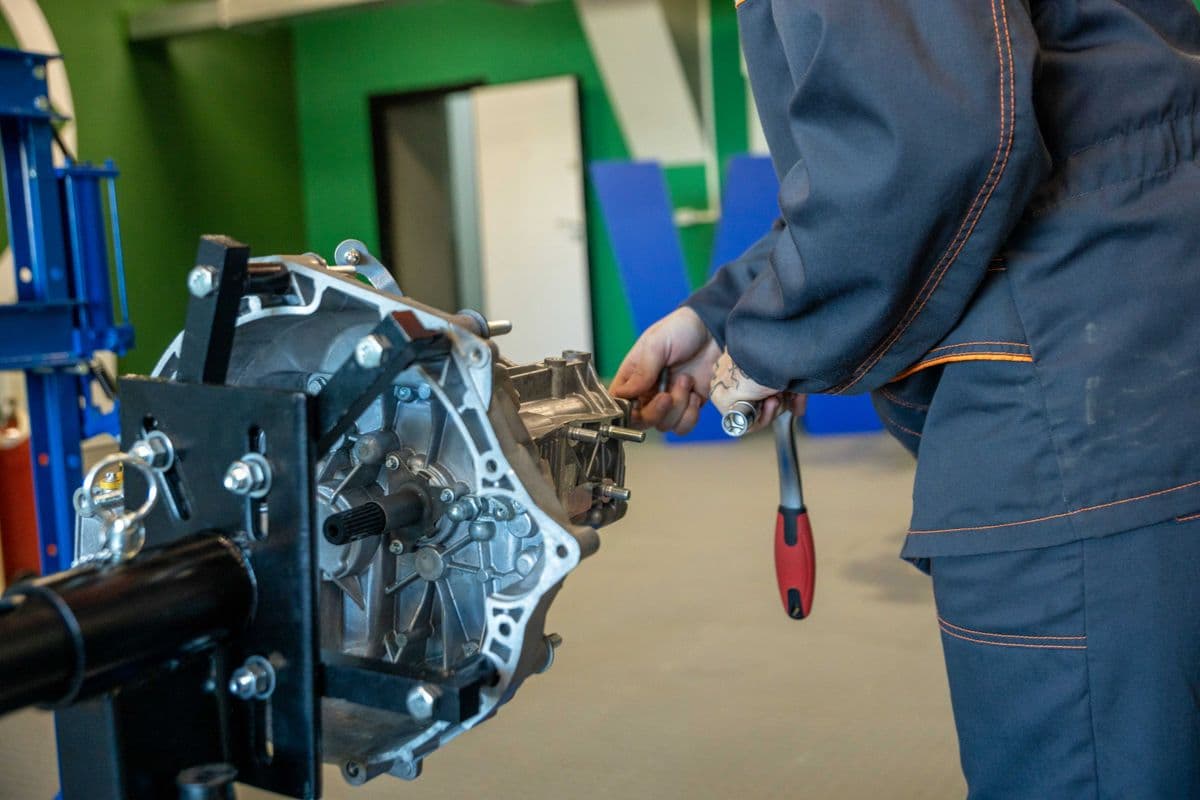
We build mechanical and electro-mechanical sub-assemblies including shaft and bearing assemblies, gear and drive assemblies, valve and manifold assemblies, hydraulic and pneumatic assemblies, pump and rotating equipment sub-assemblies, frame and chassis assemblies with fitted hardware, enclosure assemblies with mounted components, linkage and lever mechanisms, and general fitted assemblies to your drawing. Volumes run from prototype builds to ongoing production programmes.
Bill of materials management and component sourcing
An assembly programme lives or dies on bill of materials discipline. We take your bill of materials, resolve every line to a specific sourced item with a documented specification, and hold that resolution as a controlled document. Where a line is specified by brand and part number, we source that item or come back to you with a proposed equivalent and its specification for approval. Where a line is specified generically, we propose a specific item and get it approved before it enters the build.
Component sourcing spans our own manufacturing base and the bought-out supply chain. Machined parts, castings, forgings, fabrications and pressings are produced within our supply network to your drawings. Bearings, seals, fasteners, springs, circlips, gaskets, o-rings, bushes, hydraulic and pneumatic fittings, electrical components and standard hardware are bought out to specification, from named brands where you require them and from approved equivalents where you allow them.
Free-issue components are equally supported. Where you prefer to supply certain items - a proprietary component, a customer-specified brand, an item under your own supply agreement - we receive, store, count and account for them, incorporate them into the build, and report consumption and yield against your issue. Free-issue stock is stored separately and reconciled at the end of each build run.
Every component in an assembly is traceable. Manufactured components carry batch or heat numbers linked to their material certificates; bought-out components are recorded with supplier, brand, part number and, where relevant, batch or lot. That record is retained against the assembly serial or batch number, so a field failure can be traced to the specific components involved rather than to a general production period.
Assembly process, fixtures and workmanship
Assembly is carried out to a written work instruction derived from your assembly drawing, not from the drawing alone. The work instruction sets the sequence of operations, the fixture and tooling for each, the fastener torque values and tightening sequence, the lubricant, adhesive or sealant specification with cure requirements, the clearance or preload settings to be achieved, and the in-process checks at each stage. This is what makes assembly repeatable across operators and shifts.
Fixtures and jigs are designed and made for the assembly rather than improvised. Press-fit operations use arbor or hydraulic presses with force monitoring where the fit is critical, bearing fitting uses induction heating or press fitting as appropriate to the interference, and alignment-critical operations use dedicated fixtures rather than measurement after the fact. Where an operation cannot be made repeatable by fixture, we say so and propose a design change or a 100 percent inspection step.
Torque control is applied properly. Calibrated torque wrenches and torque-controlled drivers are used to the specified values, with calibration records maintained, and critical fasteners are marked after tightening so a missed fastener is visible. Where a joint requires angle-controlled or torque-to-yield tightening, that is specified and the equipment matched to it. Thread-locking and sealing compounds are applied to specification with cure time respected rather than compressed to meet a shipping date.
Cleanliness is treated as a specification where the application demands it. Hydraulic and pneumatic assemblies are built after component cleaning and are flushed and capped, with cleanliness levels verified by particle count where your specification sets one. Ports and openings are plugged and sealed for transit. An assembly delivered clean and capped can go straight onto your line; one delivered open collects contamination in the container.
Testing, functional verification and acceptance
An assembly should be tested as an assembly, because component conformance does not guarantee assembled function. We build test capability into the programme according to what the assembly does: leak testing by pressure decay, hydrostatic or air-under-water method on fluid-containing assemblies, functional actuation and cycle testing on mechanisms, rotational testing for free running, backlash and runout on drive assemblies, torque-to-turn and breakaway torque measurement, flow and pressure testing on hydraulic assemblies, and electrical continuity, insulation resistance and function testing on electro-mechanical assemblies.
Test parameters and acceptance criteria are agreed in writing before production and recorded on a test sheet for each assembly or each sampled assembly, according to whether your specification requires 100 percent testing or sampling. Test records are supplied with the shipment and retained against the serial or batch number. Where a test requires a rig we do not hold, we build or source it and include that cost transparently in the programme rather than quietly omitting the test.
Run-in and burn-in are provided where the product needs them. Rotating assemblies can be run for a specified period and re-checked for temperature, noise and vibration; mechanisms can be cycled to a specified count to confirm they do not bind or loosen. These steps take time and therefore cost money, and we quote them explicitly rather than folding them into a headline price that then makes them the first thing to be quietly dropped.
First article approval for an assembly covers more than dimensions. You receive the component-level evidence for each manufactured part, the bought-out component specifications and approvals, the assembly work instruction, the completed test records, torque verification, photographs of the completed assembly, and where relevant a witnessed test. Only after that package is accepted in writing does production begin.
Tolerance stack-up and design collaboration
Tolerance stack-up is the recurring technical problem in assembly work, and the point of buying an assembly is that we own it. Before production we analyse the stack across the assembly's critical functional dimensions, identify where the accumulated tolerance exceeds the functional requirement, and resolve it - by tightening specific component tolerances where it is cheapest to do so, by introducing a selective assembly or shimming step, by specifying an adjustment feature, or by proposing a design change to your engineering team.
This analysis frequently produces useful design feedback. It is common to find a drawing set where three components each carry unnecessarily tight tolerances while the one dimension that actually controls function is loosely toleranced. Correcting that reduces cost and improves function simultaneously, and we present it as an option with the saving quantified rather than as a criticism of the design.
Where you want us to take design responsibility for part of the assembly, we can do so within clearly stated limits: we will design brackets, fixtures, guards, covers, mounting arrangements and non-critical structural elements to your functional requirement, and we will state plainly when a design responsibility sits outside what we should be accepting. For safety-critical and regulated design work we will support your engineering team rather than substitute for it.
Kitting, part-assembly and supply format
Not every buyer wants a finished assembly, and the supply format is a commercial decision as much as a technical one. We supply fully built and tested assemblies ready to fit; part-built assemblies where a final operation must happen at your plant; and complete kits with every component, fastener and consumable bagged, labelled, counted and packed against the bill of materials with an assembly drawing enclosed.
Kits are attractive where shipping volume is the constraint, where local assembly labour is cheaper than freight, or where import duty treatment differs between assembled goods and components. That last point is a genuine commercial factor in several markets, and we will structure and document the supply accordingly where it is legitimate to do so, while being clear that classification is ultimately determined by your customs authority.
Kit completeness is verified rather than assumed. Every kit is checked against the bill of materials at packing, small items are counted rather than estimated, and a packing list itemising every line is enclosed and also supplied electronically. A missing circlip in a kit stops your assembly line just as effectively as a missing casting, so kit accuracy is treated as a critical quality characteristic.
Traceability, serialisation and after-supply support
Assemblies that go into machines usually need to be traceable for the machine's service life. We apply serial numbers or batch identifiers by laser marking, stamping, engraving or durable label as your specification requires, and maintain a record linking each serial to its component batches, test results, assembly date and operator. Where you need to trace a field failure back to a component lot, that record makes it possible.
Documentation supplied with each shipment includes the packing list, commercial invoice and certificate of origin, component material and treatment certificates, bought-out component certificates where specified, assembly and test records, torque verification records, first article and dimensional reports for manufactured components, and a certificate of conformity referencing the assembly drawing revision. Where your programme requires a controlled document set at a specific revision level, we manage revision control on our side too.
After-supply support covers spare-part supply against the same drawings and specifications, repeat production against archived specifications, engineering change management where your design evolves, and warranty investigation support where a field failure needs analysis. Engineering changes are handled formally with an effective date, disposition of existing stock and work in progress, and a re-approval step where the change affects a critical characteristic.
Setting up an assembly programme
Assembly programmes need more upfront work than component orders, and it is worth doing properly. To quote we need the assembly drawing and bill of materials, component drawings for parts to be manufactured, specifications or brand and part numbers for bought-out items, the assembly and test requirements with acceptance criteria, torque and adhesive specifications, packing and marking requirements, and quantities per batch and per year.
We come back with a component-by-component sourcing plan showing what is manufactured and what is bought out, a quotation at your stated volumes, tooling and fixture requirements with cost and ownership terms, test rig requirements, first article and production lead times, the documentation scope, and a written query list on anything in the drawing set that is ambiguous or conflicting. Query lists on assembly drawings are typically long, and that is a good sign rather than a bad one.
The most successful programmes start with a pilot build of a small quantity, fully documented and tested, which is then reviewed together before volume release. It costs a few weeks and it prevents the far more expensive outcome of discovering an assembly-level problem after five hundred units have shipped.
Assemblies specifications
| Assembly types | Shaft and bearing, gear and drive, valve and manifold, hydraulic, pneumatic, frame, enclosure, linkage assemblies |
|---|---|
| Component sourcing | Manufactured to your drawings plus bought-out bearings, seals, fasteners, fittings and hardware; free-issue supported |
| Process control | Written work instructions with sequence, fixtures, torque values, adhesive and lubricant specification |
| Torque control | Calibrated torque tools with records; angle-controlled and torque-to-yield where specified; post-tighten marking |
| Testing | Leak, hydrostatic, functional, cycle, rotational, torque-to-turn, flow, electrical continuity and insulation |
| Cleanliness | Component cleaning, flushing, capping and particle-count verification on fluid assemblies |
| Traceability | Serial or batch marking linked to component lots, test records, build date and operator |
| Supply format | Fully assembled and tested, part-assembled, or complete kits verified against the bill of materials |
| MOQ | Programme-based: pilot builds from 10 assemblies, ongoing production planned against annual volume |
| Lead time | 6-10 weeks for first article assembly including component manufacture; 6-12 weeks for production batches |
Made to your requirements
- Tolerance stack-up analysis and resolution
- Assembly and test rig design and build
- Bought-out component sourcing or free-issue handling
- Serialisation with component-level traceability records
- Kitted supply for local assembly or freight efficiency
- Engineering change management across the programme
Where our assemblies is used
Typical buyer profiles and end uses we supply into.
Assemblies export questions
The questions buyers ask most often before placing a first order.
Why buy an assembly rather than the individual components?
One part number, one price, one delivery and one quality record instead of eight or more purchase orders and eight inventory lines. More importantly, tolerance stack-up between individually conforming parts becomes our problem rather than yours. We analyse the stack across critical functional dimensions and resolve it before production instead of leaving you to diagnose fit problems on your line.
Can you use specific brands of bought-out components?
Yes. Where your bill of materials names a brand and part number we source that item. Where it is not available for your lead time, we propose an equivalent with its specification for your written approval rather than substituting silently. You can also free-issue components to us: we receive, count, store separately, incorporate and reconcile them against your issue with yield reported.
Do you functionally test assemblies?
Yes, to acceptance criteria agreed in writing before production. Depending on the assembly that includes leak and pressure-decay testing, functional actuation and cycle testing, rotational and runout checks, torque-to-turn measurement, flow and pressure testing, and electrical continuity and insulation testing. Test records are supplied with the shipment and retained against the serial or batch number.
How is traceability maintained on an assembly?
Each assembly carries a serial number or batch identifier by laser marking, stamping, engraving or durable label, linked in our records to the component batches and heat numbers, bought-out component lots, test results, build date and operator. That record is what allows a field failure to be traced back to specific component lots rather than to a broad production period.
Can you supply kits instead of built assemblies?
Yes, and it is often the better commercial choice where freight volume dominates or local assembly labour is cheaper. Kits contain every component, fastener and consumable, bagged, labelled and counted against the bill of materials, with an assembly drawing and an itemised packing list. Kit completeness is verified at packing because a missing circlip stops your line as effectively as a missing casting.
Will you give design feedback on our assembly?
Yes, offered as options with savings quantified rather than as criticism. Stack-up analysis commonly finds three components carrying unnecessarily tight tolerances while the dimension that actually controls function is loosely toleranced. We will also design non-critical elements such as brackets, guards and mountings to your functional requirement, and we will say plainly when design responsibility should stay with your engineering team.
Request a quote: Assemblies
Send your specification, quantity and destination market. We confirm feasibility, quote with a lead time and propose a sampling plan so your first order is judged on an approved sample.
- Response within 24 hours
- Samples before bulk commitment
- Full export documentation handled
Enquire about Assemblies
Pre-filled for this product - just add your details.