Rotavators
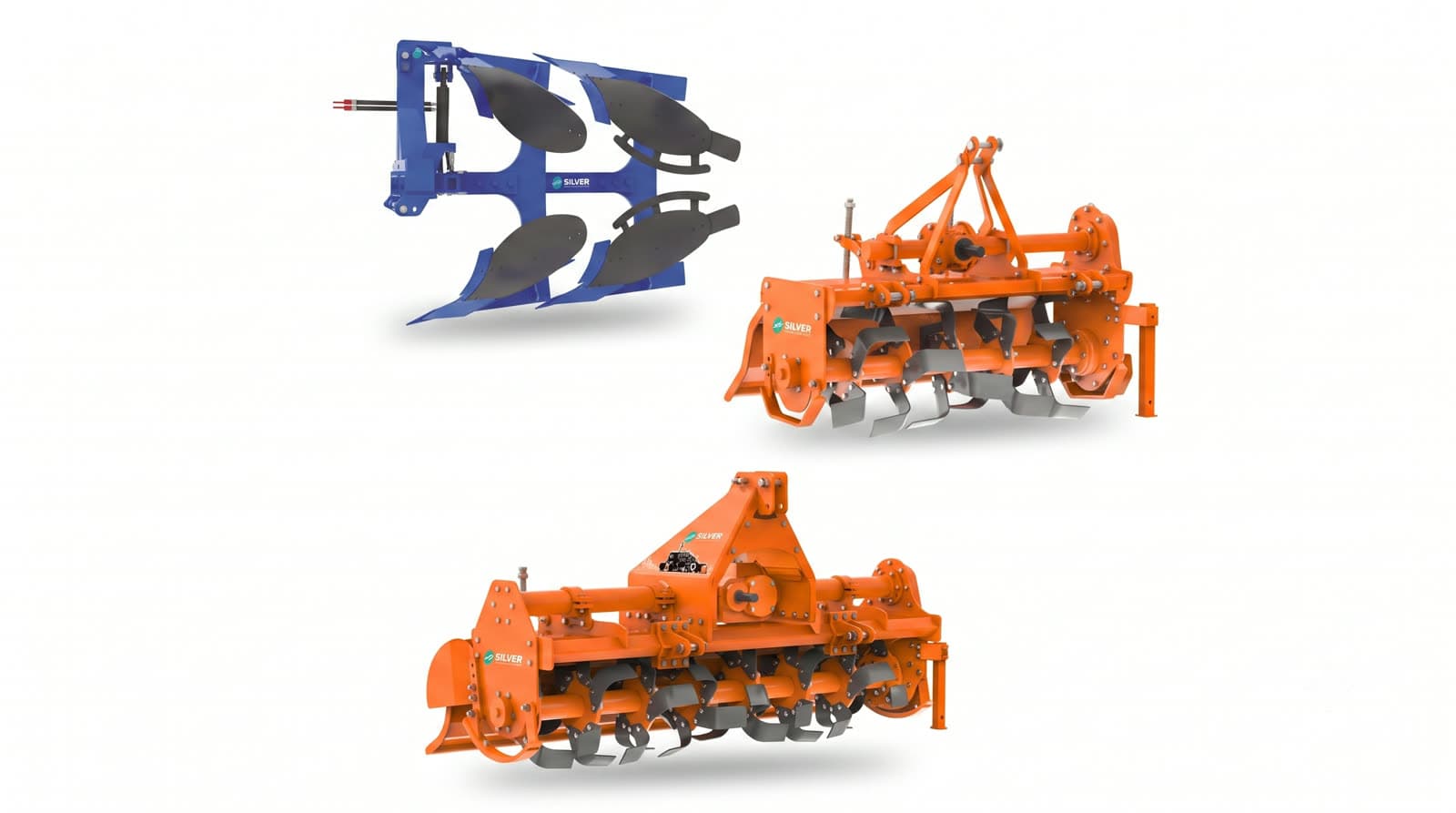
Tractor-mounted rotary tillers matched to your tractor's horsepower and hitch, with gearbox, blade and rotor specification set for the soil they will actually work.
At a glance
- Working widths matched to 25-90 HP tractors
- Multi-speed and single-speed gearbox options
- L-type, C-type and straight blade configurations
- Category I and II three-point linkage
- Blade and gearbox spares supplied with orders
Rotavators and the soil they have to work
A rotavator is a deceptively simple implement that fails in predictable ways when it is specified without reference to the soil and tractor it will work with. Too wide for the tractor and it will not pull; too narrow and it wastes passes. Wrong blade type and it will not achieve the tilth required. Underspecified gearbox and it will fail under the load of heavy soil. VP Global Exim specifies rotavators against tractor horsepower, soil type and the operation required, because these are the variables that determine whether the machine works.
We export tractor-mounted rotary tillers from India, where the implement is manufactured in very large volume and the design has been refined over decades of use in demanding conditions. Working widths cover the range suited to tractors from around 25 horsepower up to 90 horsepower and above, in multi-speed and single-speed gearbox versions, with side-drive and centre-drive configurations and a range of blade and rotor options.
Applications include primary and secondary tillage, seedbed preparation, incorporation of crop residue and stubble, mixing of manure and fertiliser into the soil, puddling for paddy cultivation, weed control by mechanical incorporation, and preparation for planting in both dry and wet conditions. The specification differs between these, particularly between dry-land tillage and wet paddy puddling.
Sizing to tractor horsepower and hitch
Rotavator sizing is a power and traction calculation, not a preference. A rotary tiller absorbs substantial power through the power take-off and also requires traction to move forward through the soil, and the power required rises with working width, working depth, soil hardness and rotor speed. A rotavator too wide for its tractor will either stall, work only at reduced depth, or overload the tractor's transmission and power take-off.
We match working width to the tractor's power take-off horsepower rather than to its engine horsepower, since power take-off power is what actually drives the rotor, and we account for the soil type. Heavy clay soils require substantially more power per unit width than light sandy soils, so the same tractor pulls a narrower rotavator in heavy ground. Where a buyer's market has predominantly heavy soil, we size conservatively rather than to a catalogue chart.
Hitch compatibility is confirmed explicitly. Three-point linkage is supplied in Category I or Category II according to the tractor, with pin diameters, lower link spacing and top link dimensions specified. A rotavator with the wrong category linkage cannot be fitted without modification, and this is a routine cause of imported implements sitting unused. We confirm the tractor makes and models the buyer serves and supply matching linkage.
Power take-off connection is equally specific. Shaft speed, spline count and diameter, and shaft length must match the tractor, and the propeller shaft must be the right length for the linkage geometry so it neither bottoms out nor pulls apart through the lift range. We supply a correctly specified propeller shaft with guards, and we point out that a shaft of the wrong length is both a mechanical and a safety problem.
Gearbox, drive and transmission
The gearbox is the component that determines whether a rotavator survives. It takes full power take-off power and turns it through ninety degrees, and it is subject to shock loading whenever the rotor strikes a stone or a root. Gearbox housing material and rigidity, gear material and heat treatment, bearing sizing, oil capacity and sealing all determine its life, and this is where cheap implements are made cheap.
Multi-speed gearboxes allow rotor speed to be changed, which is genuinely useful: a lower rotor speed gives a coarser tilth and lower power consumption for primary work, and a higher speed gives a finer tilth for seedbed preparation. Single-speed gearboxes are simpler and cheaper and are adequate where the machine does one job. We recommend according to the range of work the buyer's customers do rather than defaulting to the cheaper option.
Side drive to the rotor is typically by chain or gear. Gear drive is more robust and better sealed but costs more; chain drive is common, serviceable and adequate when the chain case is properly sealed and the chain is of good quality. Either way, the side drive case must be oil-tight, because a leaking side drive runs dry and fails, and seal quality at the rotor shaft is what prevents it.
Rotor shaft, bearings and sealing take particular attention on machines used for wet paddy work. Water and mud attack bearings and seals continuously, and a machine designed for dry tillage will fail quickly in puddling service. Where paddy work is expected, we specify enhanced sealing, appropriate bearing protection and, where available, designs intended for wet conditions, rather than supplying a standard machine into an application that will destroy it.
Blades, rotor configuration and tilth
Blade selection determines what the machine actually does to the soil. L-type blades are the general-purpose choice, cutting and lifting soil effectively for most tillage and giving good residue incorporation. C-type or curved blades work better in hard, dry and stony ground and are more resistant to damage. Straight blades are used for specific applications including puddling. Blade thickness, width and material determine wear life and resistance to bending.
Blade material and heat treatment matter more than blade shape for service life. Boron steel and other heat-treatable alloy steels hardened to an appropriate range give the wear resistance that determines how many hectares a set of blades covers. Blades that are too soft wear rapidly; blades that are too hard become brittle and snap on stones. We specify material and hardness rather than accepting a generic blade, and we verify hardness on samples.
Rotor configuration - the number of blades, their arrangement around the rotor and the flange spacing - determines tilth quality, power consumption and vibration. A rotor with more blades produces a finer tilth at higher power consumption; a properly staggered arrangement spreads the load so the machine runs smoothly rather than hammering. We specify the configuration for the intended work rather than accepting whatever the factory builds by default.
Blade wear is the main consumable cost in rotavator ownership, and we treat spares supply as part of the product. Every order can include spare blade sets, and we advise distributors to stock blades heavily because a farmer with a worn rotavator during the tillage window needs blades immediately. Bolt and nut sets for blade fixing should be stocked with them, since the fixings are usually replaced with the blades.
Frame, build quality and finish
Frame construction determines whether the machine holds its geometry. The main frame carries the gearbox, the side drives and the rotor, and it must resist twisting under asymmetric loading when one side strikes hard ground. Plate thickness, welding quality and the design of the linkage attachment points all matter, and a frame that flexes puts the rotor out of alignment, which loads bearings and seals.
Welding quality is inspected because it is the most common structural weakness in imported implements. Welds at linkage points, gearbox mounting and side drive attachment carry high loads and are inspected for size, penetration and freedom from undercut and porosity. Where the design is safety-relevant, welding is carried out to a qualified procedure by qualified welders with records supplied.
The trailing board or levelling board, side skids, depth control arrangement and rear cover are functional components rather than trim. The trailing board levels the tilled soil behind the rotor, the skids control working depth, and the rear cover contains thrown soil and stones - which is a genuine safety function. We verify these are properly built and adjustable rather than nominally present.
Surface protection is specified for agricultural service. Proper surface preparation followed by a primer and topcoat system, or powder coating where available, is what prevents a machine looking neglected after one season. Fasteners are plated or galvanised so they can be undone after a year in the field, which matters because blade changing requires undoing dozens of bolts.
Safety, guarding and compliance
Rotary tillers are among the more dangerous agricultural implements, and guarding is not optional. The power take-off propeller shaft must be supplied with full-length guards in good condition and with the guard restraint chains fitted, the rotor must be enclosed by the frame and rear cover so stones cannot be thrown at the operator or bystanders, and the drive components must be covered. We supply machines with complete guarding and we will not delete guards to reduce cost.
Safety and warning decals are supplied in the destination language where required, covering power take-off entanglement, rotor hazard, transport locking, and the requirement to disengage drive before dismounting. Where a market requires specific safety marking or conformity assessment for agricultural machinery, we confirm the requirement and route production to a manufacturer able to meet it.
Operator instruction is part of the safety package. Every machine is supplied with an operating and maintenance manual covering hitching and unhitching, propeller shaft length checking, depth and levelling adjustment, blade replacement, lubrication points and intervals, gearbox oil specification and change interval, and safe operating practice. For distributors we can supply manuals in the local language and support installer and operator training.
Packing, shipping and assembly at destination
Rotavators are bulky and awkward, and shipping them efficiently requires some disassembly. Machines are typically supplied with the linkage and trailing board detached and the propeller shaft separate, packed with the components secured to the main frame or crated alongside it, so several machines fit a container without damage. Fasteners for reassembly are bagged and labelled, and an assembly instruction is included.
Containers are loaded to a plan that secures the machines against movement, protects painted surfaces from contact, and uses the space efficiently. Because rotavators are heavy and dense at the gearbox and rotor while light overall, load planning matters for both weight distribution and damage prevention. We photograph the loaded container before sealing.
Assembly at destination is straightforward but must be done correctly. Linkage pin fitting, trailing board adjustment, propeller shaft length check against the specific tractor, gearbox oil level check and initial lubrication all need doing before the machine works. We supply the instruction and, for distributors, will prepare a simple assembly and pre-delivery inspection checklist so their workshop delivers machines ready to work rather than nominally complete.
Ordering rotavators through us
To quote we need the tractor horsepower range and preferably the specific makes and models, the linkage category, the power take-off shaft specification, the soil type and condition, whether wet paddy work is expected, the working width required, the gearbox preference, blade type preference, and quantities. Where you are replacing an existing supply, telling us the current machine and any recurring failures is the most useful information you can give.
We will respond with a specification proposal, quotation, lead time, the spares recommendation and any observations about the match between machine and tractor. Where a requested working width looks too wide for the stated tractor power or the stated soil, we will say so, because an implement that a farmer cannot pull generates returns and reputational damage rather than repeat orders.
Spares are quoted alongside the machines and we recommend ordering them together. Blades, blade bolts, gearbox seals and bearings, side drive chains or gears, and propeller shaft cross journals cover the majority of service demand, and having them on the shelf when the tillage season starts is worth considerably more than the working capital they tie up.
Rotavators specifications
| Working widths | Sized for tractors from 25 HP to 90 HP and above, matched to power take-off horsepower and soil type |
|---|---|
| Gearbox | Multi-speed and single-speed options with specified gear material, heat treatment, bearing sizing and oil sealing |
| Side drive | Gear or chain drive in an oil-tight case with specified rotor shaft sealing |
| Blades | L-type, C-type and straight blades in boron or alloy steel with specified hardness range, verified on samples |
| Rotor | Blade count, arrangement and flange spacing specified for intended tilth and smooth load distribution |
| Hitch | Category I or II three-point linkage with specified pin diameters and link spacing to match the tractor |
| Power take-off | Propeller shaft with matched speed, spline count and diameter, correct length and full-length guards with restraint chains |
| Wet conditions | Enhanced sealing and bearing protection specified where paddy puddling duty is expected |
| MOQ | 10-25 units per model; mixed widths consolidated per container |
| Lead time | 40-60 days depending on model, gearbox type and quantity |
Made to your requirements
- Working width sized to tractor power and local soil type
- Linkage and propeller shaft matched to specific tractor models
- Blade type, material and hardness specified for soil conditions
- Wet-duty sealing specification for paddy work
- Local-language manuals and safety decals
- Blade and gearbox spares packages with each order
Where our rotavators is used
Typical buyer profiles and end uses we supply into.
Rotavators export questions
The questions buyers ask most often before placing a first order.
How do I choose the right working width?
By matching it to the tractor's power take-off horsepower rather than its engine horsepower, and accounting for soil. Heavy clay needs substantially more power per unit width than light sandy soil, so the same tractor pulls a narrower rotavator in heavy ground. Where your market has predominantly heavy soil we size conservatively rather than to a catalogue chart, because a machine the farmer cannot pull generates returns.
Is a multi-speed gearbox worth the extra cost?
It is if your customers do a range of work. Lower rotor speed gives a coarser tilth and lower power consumption for primary tillage; higher speed gives a finer tilth for seedbed preparation. A single-speed gearbox is simpler and cheaper and adequate where the machine does one job. We recommend based on the work your customers actually do rather than defaulting to the cheaper option.
Will a standard rotavator work in wet paddy fields?
Not for long. Water and mud attack bearings and seals continuously, and a machine designed for dry tillage fails quickly in puddling service. Where paddy work is expected we specify enhanced sealing, appropriate bearing protection and designs intended for wet conditions, rather than supplying a standard machine into an application that will destroy it.
Which blade type should I order?
L-type for general-purpose tillage and good residue incorporation, C-type or curved blades for hard, dry and stony ground where damage resistance matters, and straight blades for specific applications including puddling. Blade material and hardness matter more than shape for service life: too soft wears fast, too hard snaps on stones. We specify and verify hardness on samples.
Why does the propeller shaft length matter?
Because a shaft of the wrong length either bottoms out or pulls apart through the linkage lift range, which is both a mechanical failure and a safety hazard. Shaft speed, spline count and diameter must match the tractor as well. We supply a correctly specified shaft with full-length guards and restraint chains, and we need the tractor models you serve to get it right.
What spares should a distributor stock?
Blades above everything, with matching bolt and nut sets, since blades are the main consumable and a farmer with a worn rotavator during the tillage window needs them immediately. Beyond that, gearbox seals and bearings, side drive chains or gears, and propeller shaft cross journals cover most service demand. We quote spares alongside machines and recommend ordering them together.
Request a quote: Rotavators
Send your specification, quantity and destination market. We confirm feasibility, quote with a lead time and propose a sampling plan so your first order is judged on an approved sample.
- Response within 24 hours
- Samples before bulk commitment
- Full export documentation handled
Enquire about Rotavators
Pre-filled for this product - just add your details.